
Chiisana Boukensha – English Lyrics
Lyrics & Translation
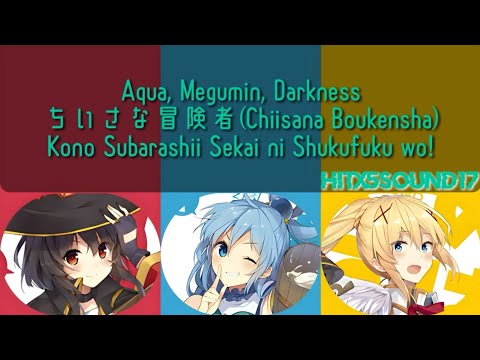
Embark on a linguistic adventure with “Chiisana Boukensha,” the ending theme from *KonoSuba*. This lively song, sung by the anime's main characters, offers a fun way to learn Japanese through its simple yet inspiring lyrics about resilience and small adventures .
Key Vocabulary
| Vocabulary | Meanings |
|---|---|
|
冒険 /bōken/ B1 |
|
|
船 /fune/ A2 |
|
|
風 /kaze/ A2 |
|
|
海 /umi/ A2 |
|
|
鳥 /tori/ A2 |
|
|
空 /sora/ A2 |
|
|
走る /hashiru/ A2 |
|
|
飛ぶ /tobu/ A2 |
|
|
戦う /tatakau/ B1 |
|
|
負ける /makeru/ B1 |
|
|
紫 /murasaki/ A2 |
|
|
傷 /kizu/ A2 |
|
|
恥ずかしい /hazukashii/ A2 |
|
|
悔しい /kuyashii/ B1 |
|
|
笑う /warau/ A2 |
|
|
春 /haru/ A2 |
|
“冒険, 船, 風” – got them all figured out?
⚡ Dive into vocabulary challenges in the app and lock in your knowledge right after jamming to "Chiisana Boukensha"
Key Grammar Structures
-
Koronde surimuita toko
➔ Te-form of verbs (Koronde, surimuita)
➔ The te-form is used to connect actions or to indicate a change in state. Here, 'Koronde' (rolling) and 'surimuita' (scraped) are connected to describe a sequence of events.
-
Chi ga nijinde shimiru keredo
➔ Ga (subject marker), Te-form + shimiru (consequence)
➔ 'Chi ga' marks the subject 'blood', and 'nijinde shimiru' uses the te-form to show a consequence of the previous action, meaning 'stings because it’s bruised'.
-
Heccharasa sugu naoru kara
➔ Kara (reason/cause)
➔ 'Kara' is used to give a reason or cause for the following statement, here meaning 'because it will heal quickly'.
-
Kyou mo mata baka ni sareta yo
➔ Mo (emphasis), Ni (by/from), Yo (sentence-ending particle)
➔ 'Mo' emphasizes repetition, 'ni' indicates the agent of the action, and 'yo' adds emphasis or emotion to the sentence.
-
Misaki kara fune wo daseba
➔ Kara (from), Ba (conditional)
➔ 'Kara' indicates the starting point, and 'ba' introduces a conditional statement, meaning 'if you set sail from the cape'.
Album: Kono Subarashii Sekai ni Shukufuku o! 2 Original Soundtrack
Same Singer
Related Songs

Lovely
Billie Eilish, Khalid

Lovely
Billie Eilish, Khalid

竈門禰󠄀豆子のうた
椎名豪 featuring 中川奈美
My Favorite Things
Kylie Cantrall

Catching Fire
KALLY'S Mashup Cast

A Thousand Years
Christina Perri

GO!
KALLY'S Mashup Cast, Maia Reficco

Secret
KALLY'S Mashup Cast, Maia Reficco, Sarai Meza
We Are Monster High
Madison Beer
Darkness Takeover V1 OST - A Family Guy

Movin' On
KALLY'S Mashup Cast, Maia Reficco
Lost Boys
Phoebe Bridgers
Legends Never Die
Against The Current
The Amazing Digital Circus Main Theme (Alternate Ending Version)
MilkyyMelodies, ForticGX
オリオン
YOASOBI

Make It Home
KALLY'S Mashup Cast, Maia Reficco

I'm Winning
ZOMBIES 2 Cast
Star Sky
Two Steps From Hell
ใจจงมั่น
ปราง ปรางทิพย์, KENG HARIT

DREAMERS
Jungkook, Fahad Al Kubaisi