
Lyrics & Translation
Dive into the rhythmic and atmospheric world of Soda Stereo! 'Angel Electrico' is a perfect gateway to learning Spanish through poetic, abstract imagery and emotive phrasing, making it an excellent choice for those looking to understand how metaphor and sound intertwine in Latin Rock.
Key Vocabulary
| Vocabulary | Meanings |
|---|---|
|
tempestad tempestad B2 |
|
|
paisaje paisaje B1 |
|
|
habitual habitual B2 |
|
|
árbol árbol A1 |
|
|
sodio sodio B2 |
|
|
caída caída B1 |
|
|
ángel ángel B1 |
|
|
eléctrico eléctrico B2 |
|
|
estática estática B2 |
|
|
volví volví B1 |
|
|
cargado cargado B2 |
|
|
enredado enredado B2 |
|
|
cables cables B1 |
|
|
resignación resignación C1 |
|
|
hábito hábito B2 |
|
|
esperar esperar A2 |
|
|
quiebre quiebre B2 |
|
|
unísono unísono C1 |
|
|
acorde acorde B2 |
|
|
sombra sombra A1 |
|
Are there any new words in “Angel Electrico” you don’t know yet?
💡 Hint: tempestad, paisaje… Jump into the app and start learning now!
Key Grammar Structures
-
Ahí va la tempestad
➔ Present tense with 'ir' (to go)
➔ The phrase uses the present tense of 'ir' (to go) to describe an ongoing action.
-
Ya parece un paisaje habitual
➔ Present tense with 'parecer'
➔ 'Parece' is the present tense of 'parecer', meaning 'to seem'. It expresses an opinion or appearance.
-
Tengo estática y no querría lastimarte de nuevo
➔ Present tense with 'tener' and conditional with 'querer'
➔ 'Tengo' is the present tense of 'tener' (to have), while 'querría' is the conditional form of 'querer' (to want), expressing a hypothetical situation.
-
Estoy al filo de la resignación
➔ Present tense with 'estar'
➔ 'Estoy' is the present tense of 'estar' (to be), used to describe a temporary state or location.
-
De esperar que algo quiebre el unísono
➔ Infinitive with 'esperar' and subjunctive with 'quebrar'
➔ The infinitive 'esperar' (to wait) is used, followed by the subjunctive 'quiebre' (to break), expressing uncertainty or desire.
Album: Sueño Stereo
Zoom
Soda Stereo
Ojo de la Tormenta
Soda Stereo
Disco Eterno
Soda Stereo
Efecto Doppler
Soda Stereo
Pasos
Soda Stereo
Crema de Estrellas
Soda Stereo
Planta
Soda Stereo
Moirè
Soda Stereo

Angel Electrico
Soda Stereo
Same Singer

Zoom
Soda Stereo
Prófugos
Soda Stereo

Cancion Animal
Soda Stereo
De Música Ligera
Soda Stereo

De musica ligera
Soda Stereo
Zoom
Soda Stereo
Ojo de la Tormenta
Soda Stereo
Disco Eterno
Soda Stereo
Efecto Doppler
Soda Stereo
Pasos
Soda Stereo
Crema de Estrellas
Soda Stereo
Planta
Soda Stereo
Moirè
Soda Stereo
Sobredosis de T.V.
Soda Stereo
Dietético
Soda Stereo
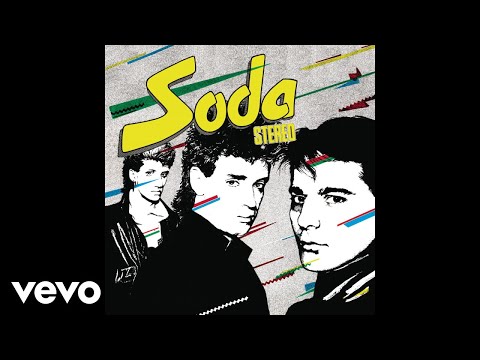
El Tiempo Es Dinero
Soda Stereo
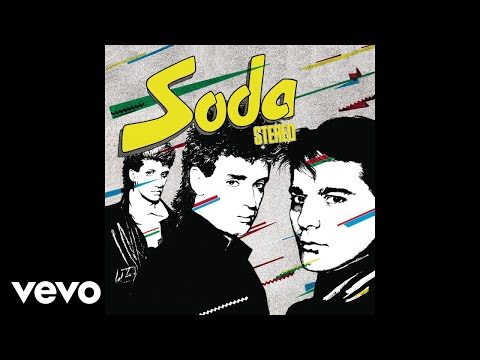
Afrodisíacos
Soda Stereo
Angel Electrico
Soda Stereo
Related Songs

No.7
Mrs. GREEN APPLE

パッチワーク・ヒーロー
緋八マナ
Molecular Gastronomy
Silica Gel

Eternal Summer
The Strokes
Not The Same Anymore
The Strokes
Ode To The Mets
The Strokes

What Ever Happened?
The Strokes

Between Love & Hate
The Strokes

Meet Me in the Bathroom
The Strokes

Under Control
The Strokes

The Way It Is
The Strokes

I Can't Win
The Strokes

You Talk Way Too Much
The Strokes

Dead Man Walking
Against The Current
House of Memories
Panic! At The Disco

どうしてもどうしても
back number

C.U.R.I.O.S.I.T.Y.
ONE OK ROCK

Whiskey in the Jar
Metallica
Sunset
Nerd Connection
Beggin'
Måneskin