
Lyrics & Translation
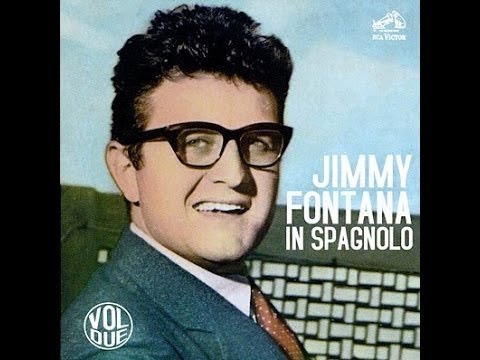
Discover the poignant Italian ballad "Il Mondo" by Jimmy Fontana. Through its timeless melody and introspective lyrics, you can explore themes of love, loss, and the ceaseless passage of time, offering a beautiful gateway to understanding the emotional depth often found in Italian music.
Key Vocabulary
| Vocabulary | Meanings |
|---|---|
|
amore /aˈmo.re/ A1 |
|
|
mondo /ˈmon.do/ A1 |
|
|
notte /ˈnɔt.te/ A1 |
|
|
giorno /ˈdʒor.no/ A1 |
|
|
silenzio /siˈlɛn.tsi.o/ B1 |
|
|
gioia /ˈdʒɔ.ja/ B1 |
|
|
dolore /doˈlo.re/ B1 |
|
|
fermare /ferˈma.re/ B1 |
|
|
inseguire /in.seˈɡwi.re/ B2 |
|
|
guardare /ɡwarˈda.re/ B2 |
|
|
nato /ˈna.to/ B2 |
|
|
finito /fiˈni.to/ B2 |
|
|
niente /ˈnjɛn.te/ B2 |
|
Are there any new words in “Il Mondo” you don’t know yet?
💡 Hint: amore, mondo… Jump into the app and start learning now!
Key Grammar Structures
-
Stanotte amore non ho più pensato a te
➔ Negative 'più' with passato prossimo.
➔ The phrase "non ho più pensato" means 'I didn't think anymore'. 'Più' negates the action of thinking again. 'Ho pensato' is the 'passato prossimo' (past perfect tense) form of 'pensare' (to think).
-
E intorno a me girava il mondo come sempre
➔ Imperfect tense (girava) to describe an ongoing action/state in the past.
➔ "Girava" is the imperfect tense of 'girare' (to turn). It describes the world's continuous rotation in the past, implying it was an ongoing, habitual, or background action.
-
Con gli amori appena nati
➔ Use of 'appena' + past participle to indicate recently happened action.
➔ 'Appena nati' means 'just born' or 'newly born'. 'Appena' emphasizes the recency of the action ('nascere' - to be born).
-
Soltanto adesso io ti guardo
➔ Adverb "soltanto" emphasizing time. Subject-verb inversion for emphasis (less common in modern Italian, more poetic).
➔ "Soltanto adesso" emphasizes that only *now* is the speaker looking at the person. The usual word order would be "Io ti guardo soltanto adesso". The inversion adds a dramatic effect.
-
Nel tuo silenzio io mi perdo
➔ Reflexive verb "perdersi" (to get lost) used with a pronoun.
➔ "Mi perdo" means 'I get lost'. The 'mi' is the reflexive pronoun that indicates the subject (io) is also the object of the verb.
-
Non si è fermato mai un momento
➔ Passato Prossimo with reflexive "si" and adverb "mai".
➔ "Non si è fermato mai" translates to "It has never stopped". "Si" indicates a reflexive or intransitive construction (in this case, intransitive). "Mai" means 'never' and reinforces the negative meaning.
-
La notte insegue sempre il giorno
➔ Use of adverb "sempre" with present tense to express a general truth.
➔ "Insegue sempre" means 'always chases'. "Sempre" (always) emphasizes that this is a constant, unchanging occurrence.
Same Singer
Related Songs

Tomboy
Destiny Rogers

Baby
Justin Bieber, Ludacris

Love Somebody
Aura

Back to my ways
Nanu

Dancing with the Devil
Nanu

Sad Girls
Bebe Rexha, David Guetta

My Love
Westlife

cry on my shoulder
super star

Dangerously
Charlie Puth

Cupid (Twin version)
FIFTY FIFTY
I Am A Gummy Bear (The Gummy Bear Song)
Gummibär
Ordinary
Alex Warren

Let It Go
Idina Menzel, NateWantsToBattle
Hips Don't Lie
Shakira, Wyclef Jean

Can't Help Myself
aespa
飛ぶ時
Vaundy
ポルターガイスト
なとり

Été avec toi
Adèle Castillon

Pépélé
Fally Ipupa, Guy2Bezbar

Dracula (JENNIE Remix)
Tame Impala, JENNIE