
Lyrics & Translation
Learning a language through music is a fantastic journey, and "Abarajame" by Illya Kuryaki and the Valderramas offers a unique linguistic challenge. The song is a vibrant collage of Argentine slang, Spanglish, and invented words, reflecting the creative and rebellious spirit of 90s Latin rock. By exploring its lyrics, you can learn about urban Argentine culture and the playful, boundary-pushing nature of language in music.
Key Vocabulary
| Vocabulary | Meanings |
|---|---|
|
holiday /ˈhɒ.lɪ.deɪ/ A2 |
|
|
pierna /ˈpjɛr.na/ A2 |
|
|
herba /ˈjer.ba/ B2 |
|
|
enlace /enˈlaθe/ B2 |
|
|
atrapar /aˈtɾa.paɾ/ B1 |
|
|
llamarada /ʎamaˈɾaða/ B2 |
|
|
rezar /reˈθaɾ/ B1 |
|
|
zafar /θaˈfaɾ/ C1 |
|
|
selva /ˈsel.va/ A2 |
|
|
venas /ˈbe.nas/ B2 |
|
|
jaguar /xaˈɣwar/ B2 |
|
|
árbol /ˈar.βol/ A1 |
|
|
podar /poˈðaɾ/ B2 |
|
|
bendición /bendison/ C1 |
|
|
despertar /despeɾˈtaɾ/ A2 |
|
|
morir /moˈɾiɾ/ A2 |
|
|
baile /ˈbai.le/ A1 |
|
|
quemar /keˈmaɾ/ A2 |
|
|
viento /ˈbjen.to/ A2 |
|
💡 Which new word in “Abarajame” caught your eye?
📱 Open the app to check meanings, build sentences, and try them out in real convos!
Key Grammar Structures
-
Holiday en Chaco con tu mamita
➔ Use of preposition 'en' to indicate location.
➔ The word 'en' shows that the action or situation happens in or at a place ('in Chaco').
-
Pretendo atraparte y reírme en tu viaje
➔ Use of infinitive verbs after another verb (verb chaining).
➔ The verbs 'atraparte' ('to catch you') and 'reírme' ('to laugh myself') are infinitives following 'pretendo' ('I intend').
-
Noche chaqueña, luna plateada
➔ Use of adjectives after nouns, common in Spanish poetry.
➔ Adjectives 'chaqueña' (from Chaco) and 'plateada' (silver-colored) come after nouns, creating poetic imagery.
-
Todo se remite a ver lo que es parado frente a mí
➔ Relative pronoun 'que' to connect clauses.
➔ The word 'que' introduces a subordinate clause 'que es parado frente a mí', describing what is being seen.
-
Métete en el Chaco y comienza a rezar
➔ Use of imperative form for commands.
➔ 'Métete' (get in) and 'comienza' (begin) are imperative forms telling someone to take action.
-
Selva de mis venas, tierra de jaguar
➔ Use of noun apposition and metaphor.
➔ 'Selva de mis venas' compares the veins to a jungle, and 'tierra de jaguar' is a poetic apposition identifying the land metaphorically.
-
Dame bendiciones, hay que despertar
➔ Use of infinitive with 'hay que' to express obligation.
➔ The phrase 'hay que despertar' means 'one must wake up', showing obligation without referring to a specific subject.
-
Porque los güelos no entran al Chaco
➔ Use of negative form with 'no' + verb.
➔ 'No entran' means 'they do not enter', formed by placing 'no' before the verb.
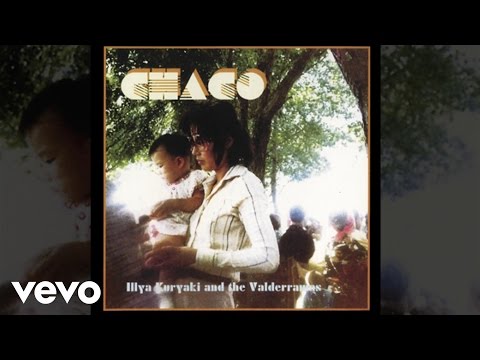
Album: Chaco

Same Singer
Related Songs

No.7
Mrs. GREEN APPLE
パッチワーク・ヒーロー
緋八マナ
Molecular Gastronomy
Silica Gel

Eternal Summer
The Strokes
Not The Same Anymore
The Strokes
Ode To The Mets
The Strokes

What Ever Happened?
The Strokes

Between Love & Hate
The Strokes

Meet Me in the Bathroom
The Strokes

Under Control
The Strokes

The Way It Is
The Strokes

I Can't Win
The Strokes

You Talk Way Too Much
The Strokes

Dead Man Walking
Against The Current

House of Memories
Panic! At The Disco
どうしてもどうしても
back number

C.U.R.I.O.S.I.T.Y.
ONE OK ROCK

Whiskey in the Jar
Metallica
Sunset
Nerd Connection

Beggin'
Måneskin