
Lyrics & Translation
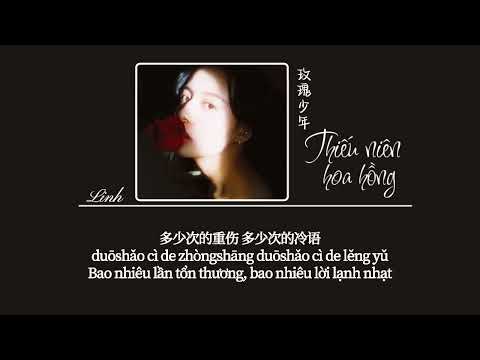
Explore the touching story behind Jolin Tsai's "玫瑰少年" (Womxnly), a tribute to Yeh Yung-chih and a powerful anthem for gender equality. Learn about the cultural context, the heartfelt message, and the inspiring lyrics that promote self-acceptance and inclusivity, making it a meaningful song for language and culture enthusiasts.
Key Vocabulary
| Vocabulary | Meanings |
|---|---|
|
玫瑰 /méiguī/ B1 |
|
|
荊棘 /jīngjí/ C2 |
|
|
報復 /bàofù/ B2 |
|
|
美麗 /měilì/ B1 |
|
|
盛開 /shèngkāi/ C1 |
|
|
反擊 /fǎnjí/ B2 |
|
|
改變 /gǎibiàn/ B1 |
|
|
愛 /ài/ A2 |
|
|
靈魂 /línghún/ C1 |
|
|
身體 /shēntǐ/ A2 |
|
|
囹圄 /língyǔ/ C2 |
|
|
罪 /zuì/ B2 |
|
|
生而為人 /shēng ér wéi rén/ C1 |
|
|
安靜 /ānjìng/ A2 |
|
|
自由 /zìyóu/ B1 |
|
|
控訴 /kòngsù/ C2 |
|
|
真理 /zhēnlǐ/ C1 |
|
|
真心 /zhēnxīn/ B2 |
|
Are there any new words in “玫瑰少年” you don’t know yet?
💡 Hint: 玫瑰, 荊棘… Jump into the app and start learning now!
Key Grammar Structures
-
哪朵玫瑰没有荆棘
➔ Interrogative pronoun ‘哪’ plus a measure word and noun forms a rhetorical question “which … does not have …”.
➔ “哪” introduces the question, “没有” is the negation, and “荆棘” means “thorns”.
-
最好的报复是美丽
➔ Superlative structure “最…的” followed by a copular clause “是 …”.
➔ “最好的” means “the best”, “报复” is “revenge”, and “是美丽” asserts “is beauty”.
-
别让谁去改变了你
➔ Negative imperative “别” + causative verb “让” + object + infinitive “去 + verb”.
➔ “别” means “don’t”, “让” is “let/make”, “去改变了” = “to go and change”.
-
会有人全心的爱你
➔ Modal verb “会” indicating future possibility, followed by subject “有人” and a noun phrase “全心的爱”.
➔ “会” = “will/can”, “有人” = “someone”, “全心的爱你” = “love you wholeheartedly”.
-
谁把谁的灵魂装进谁的身体
➔ “把” construction to indicate the disposal of an object, with repeated “谁的” forming a complex possession structure.
➔ “谁” = “who”, “把” = introduce object “灵魂”, “装进” = “put into”, “身体” = “body”.
-
乱世总是最不缺耳语
➔ Adverbial phrase “总是” with a superlative negative “最不缺” describing a constant state.
➔ “总是” = “always”, “最不缺” = “the least lacking”, “耳语” = “whispers”.
-
你并没有罪 有罪是这世界
➔ Contrastive conjunction “并” emphasizing negation, and a nominal clause “有罪是这世界” with “是” equating two nouns.
➔ “并没有” = “actually not”, “罪” = “crime/guilt”, “有罪是这世界” = “the world itself is guilty”.
-
生而为人无罪 你不需要抱歉
➔ Parallel declarative clauses linked by a pause, with “为” indicating a role and “不需要” expressing lack of necessity.
➔ “生而为人” = “born as a human”, “无罪” = “innocent”, “不需要抱歉” = “don’t need to apologize”.
-
喧哗如果不停 让我们陪你安静
➔ Conditional clause with “如果” + verb, followed by a causative‑imperative “让”.
➔ “如果” = “if”, “不停” = “does not stop”, “让我们陪你安静” = “let us keep you quiet”.
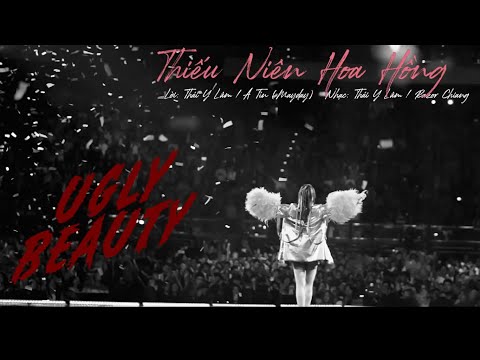
Album: Ugly Beauty
Same Singer

Related Songs
My Skin's On Fire
Loving Caliber
Don't You Wanna Stay
Loving Caliber

Those Eyes
New West

We Don't Talk Anymore
Charlie Puth, Selena Gomez

Monster
Shawn Mendes, Justin Bieber

Never Be the Same
Camila Cabello

The 30th
Billie Eilish

Ordinary
Alex Warren
Girls Wanna Have Fun
Josh Fawaz

Gimme Dat Love
(G)I-DLE

花咲く道
ME:I

未完成婚姻論
超学生, マサ

しおざきわんだーらんど
M!LK, 塩﨑太智

des fleurs
Tove Lo, Stromae
WOKE UP IN TOKYO
BABYMONSTER
No Promises
Shayne Ward

No promises
Shayne Ward

DREAMERS
Jungkook, Fahad Al Kubaisi

Em Mới Là Người Yêu Anh
MIN

Attention
Charlie Puth