
Lyrics & Translation
Dive into the poetic beauty of the Spanish language with 'Un Día Cualquiera.' Through Silvana Estrada's evocative lyrics and crystalline vocals, learners can discover the nuance of emotive storytelling and the use of descriptive adjectives to paint vivid emotional landscapes in Spanish.
Key Vocabulary
| Vocabulary | Meanings |
|---|---|
|
cualquiera kwalˈkjeɾa A2 |
|
|
prisas ˈpɾisas A2 |
|
|
argumentos aɾɣuˈmentos B1 |
|
|
fresquitas fɾesˈkitas B1 |
|
|
eco ˈeko B2 |
|
|
hermoso eɾˈmoso A1 |
|
|
murmullos muɾˈmuʝos B2 |
|
|
beso ˈbeso A1 |
|
|
alegre aˈleɣɾe A2 |
|
|
mariposa maɾiˈposa A2 |
|
|
miedo ˈmjeðo A1 |
|
|
rival riˈβal B2 |
|
|
alba ˈalβa C1 |
|
💡 Which new word in “Un Día Cualquiera” caught your eye?
📱 Open the app to check meanings, build sentences, and try them out in real convos!
Key Grammar Structures
-
Quiero un día cualquiera de prisas y argumentos
➔ Indefinite adjective 'cualquiera' (post-noun placement)
➔ When 'cualquiera' follows a noun, it means 'any' or 'ordinary', emphasizing the casual nature of the day.
-
De noches que me esperan fresquitas y en silencio
➔ Diminutive suffix '-ita' for affective/descriptive use
➔ The suffix '-ita' attached to 'fresca' (fresquitas) adds a sense of comfort and pleasant coolness.
-
Quiero ser del tiempo si acaso un eco hermoso
➔ Conditional 'si acaso' + subjunctive/indicative for hypothesis
➔ 'Si acaso' is used here to introduce a remote or modest possibility ('if by chance').
-
Pasar la vida entera mirándote a los ojos
➔ Gerund '-ando' used to describe the manner of the action
➔ The gerund 'mirándote' describes how the speaker wants to spend their whole life.
-
Quiero ser del miedo rival en tu alma
➔ Genitive construction 'del' (de + el) for belonging/relation
➔ 'Del miedo' functions as a complement indicating the thing the subject (the speaker) wants to compete against.
-
Y cuando caiga el alba
➔ Subjunctive 'caiga' in temporal clause 'cuando'
➔ Subjunctive is used here because it refers to a future, non-experienced event (the arrival of dawn).
-
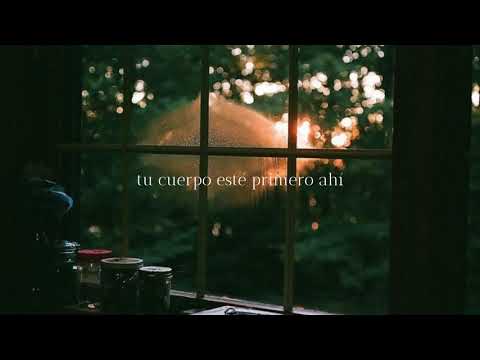
Tu cuerpo esté primero ahí
➔ Subjunctive 'esté' for wish/desire (after 'quiero que')
➔ The verb 'estar' is in the subjunctive because it is part of the speaker's desire ('I want that...').
-
Decirte que te quiero ahí
➔ Direct object pronoun placement (enclitic)
➔ The pronoun 'te' is attached to the infinitive 'decir' to form 'decirte'.
Album: Marchita
Same Singer
La Corriente
Silvana Estrada
Un Día Cualquiera
Silvana Estrada
Sabré Olvidar
Silvana Estrada

Tristeza
Silvana Estrada
Un día cualquiera
Silvana Estrada
Carta
Silvana Estrada
Te Guardo
Silvana Estrada
Un día cualquiera
Silvana Estrada
Un Día Cualquiera
Silvana Estrada
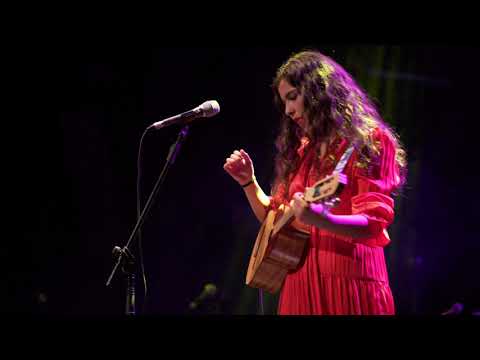
Carta
Silvana Estrada
Related Songs

Song for Sophie
Aura Dione

hoax
Taylor Swift
evermore
Taylor Swift, Bon Iver
closure
Taylor Swift
cowboy like me
Taylor Swift
ivy
Taylor Swift

Maggie Mae
The Beatles

Let Her Go
Passenger

Something To Someone
Max McNown

Let Her Go
Passenger

Welcome Home, Son
Radical Face
Si Tú Supieras Compañero
ROSALÍA
I See A Darkness
ROSALÍA

Vocea de care eu mor
Florin Cercel

Let Her Go
Passenger

Palomas Blancas
Natalia Lafourcade
Para Qué Sufrir
Natalia Lafourcade
Vámonos Negrito
Natalia Lafourcade
You Were Meant For Me
Jewel
You Were Meant For Me
Jewel