
Lyrics & Translation
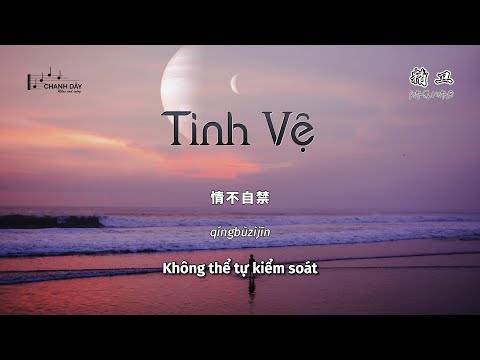
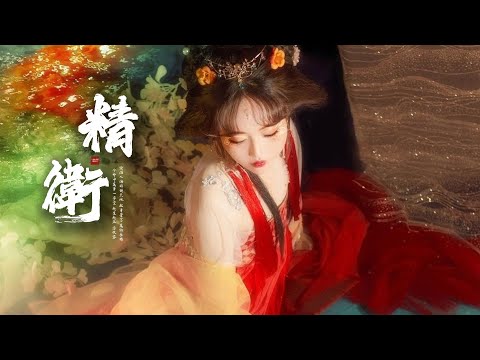
Discover the raw emotion of Chinese music through '精衛' (Jīngwèi). This song offers a unique opportunity to learn about Chinese mythology and the expressive power of the language, particularly through its use of operatic vocal styles. '精衛' is special for its blend of modern pop sensibilities with ancient folklore, creating a timeless anthem of perseverance that will resonate deeply even if you don't understand every word.
Key Vocabulary
| Vocabulary | Meanings |
|---|---|
|
養心殿 yǎng xīn diàn HSK5 |
|
|
瀑 pù HSK3 |
|
|
淋 lín HSK2 |
|
|
閑暇 xián xiá HSK4 |
|
|
臭 chòu HSK1 |
|
|
填 tián HSK3 |
|
|
灌溉 guàngài HSK4 |
|
|
欲壑 yù hè HSK6 |
|
|
滄海 cāng hǎi HSK5 |
|
|
沉淪 chén lún HSK5 |
|
|
銜 xián HSK4 |
|
|
木石 mù shí HSK2 |
|
|
飛奔 fēi bēn HSK3 |
|
|
蒼穹 cāng qióng HSK5 |
|
|
長擁 cháng yōng HSK4 |
|
🚀 "養心殿", "瀑" – from “精衛” still a mystery?
Learn trendy vocab – vibe with music, get the meaning, and use it right away without sounding awkward!
Key Grammar Structures
-
你與我 先談養心殿
➔ Topic marker + Subject + Verb + Object
➔ The structure establishes the topic ('你與我' - You and I) and then describes an action or state ('先談養心殿' - first talk in the Hall of Mental Cultivation).
-
也罷
➔ Final Particle/Exclamatory Particle
➔ This expresses acceptance, resignation, or the idea that something is 'so be it' or 'oh well'.
-
至填沒在大海
➔ Verb + Complement of Result
➔ The verb '填' (to fill) followed by the result complement '沒' (to submerge, to drown). Expresses the result of filling to the point of being submerged.
-
是現在我所有期待 所有的愛
➔ Copula (是) + Adverb of time + Subject + Adjective/Noun phrase
➔ Uses '是' to connect the time/state ('現在' - now) with what follows (expectations and love). It functions as 'is' or 'are'.
-
為什麼不明白
➔ Why... not... understand
➔ Question word + Negative adverb + Verb. Direct question structure.
-
似我的哀
➔ Adjective-like/Similative particle (似) + Possessive + Noun
➔ Uses '似' (similar to, like) to compare something to 'my sorrow' (我的哀).
-
可填滄海 成敗不堪一說
➔ Verb + Object + Subject + Verb + Complement of result
➔ This line shows a more advanced sentence structure. The first part '可填滄海' (can fill the ocean) is a verb-object phrase. '成敗不堪一說' (Success and failure are not worth mentioning) is an independent clause expressing the consequence. This highlights the futility of effort.
-
我只是太想要份愛
➔ Adverb + Verb + Object + Classifier
➔ Uses '太' (too) to intensify the desire for 'a love' (一份愛). Demonstrates a high degree of need.
-
今命中萬事一字空
➔ Time word + Subject + Verb + Object
➔ Expresses a feeling of emptiness in the present moment, where everything is 'empty' (空). A concise expression of nihilism. The use of '一字空' (one word, emptiness) is particularly poetic.
Same Singer
Related Songs
My Skin's On Fire
Loving Caliber
Don't You Wanna Stay
Loving Caliber

Those Eyes
New West

We Don't Talk Anymore
Charlie Puth, Selena Gomez

Monster
Shawn Mendes, Justin Bieber

Never Be the Same
Camila Cabello

The 30th
Billie Eilish

Ordinary
Alex Warren

Girls Wanna Have Fun
Josh Fawaz

Gimme Dat Love
(G)I-DLE

花咲く道
ME:I

未完成婚姻論
超学生, マサ
しおざきわんだーらんど
M!LK, 塩﨑太智

des fleurs
Tove Lo, Stromae
WOKE UP IN TOKYO
BABYMONSTER

No Promises
Shayne Ward

No promises
Shayne Ward
DREAMERS
Jungkook, Fahad Al Kubaisi

Em Mới Là Người Yêu Anh
MIN

Attention
Charlie Puth