
Lyrics & Translation
Embark on a journey into the rich lyrical world of Brazilian Portuguese with Chico Buarque's "Minha História." This song offers a powerful insight into social critique and raw human emotion, making it an excellent piece to understand not only the language but also the historical and cultural depth of Brazil during a challenging era. Its artful adaptation and poignant storytelling make it a special and enduring work for language learners.
Key Vocabulary
We're updating this section. Stay tuned!
Key Grammar Structures
-
Ele vinha sem muita conversa, sem muito explicar
➔ Use of gerunds after prepositions.
➔ The phrases 'sem muita conversa' and 'sem muito explicar' use the gerund ('conversa', 'explicar') after the preposition 'sem' (without). This is a common construction in Portuguese to indicate a lack of something.
-
Sei que tinha tatuagem no braço e dourado no dente
➔ Use of 'ter' + noun to express possession.
➔ The sentence uses the verb 'ter' (to have) followed by a noun to indicate possession. 'tatuagem no braço' means 'tattoo on the arm' and 'dourado no dente' means 'gold in the tooth'.
-
Mas por não se lembrar de acalantos, a pobre mulher
➔ Use of the infinitive after a preposition ('de').
➔ The phrase 'se lembrar de acalantos' uses the infinitive 'lembrar' (to remember) after the preposition 'de'. This is a common construction in Portuguese when a verb requires a preposition before another verb.
-
Me ninava cantando cantigas de cabaré
➔ Gerund as adverbial modifier.
➔ "cantando cantigas de cabaré" functions as an adverbial modifier, describing *how* she was rocking the child. The gerund 'cantando' (singing) modifies the verb 'ninava' (rocked).
Album: Construção

Deus Lhe Pague
Chico Buarque
Cotidiano
Chico Buarque
Desalento
Chico Buarque
Cordão
Chico Buarque
Samba De Orly
Chico Buarque
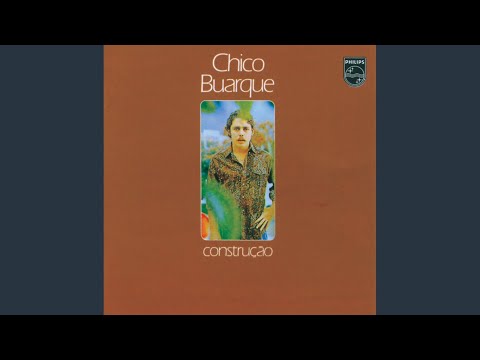
Minha Historia
Chico Buarque
Valsinha
Chico Buarque
Acalanto
Chico Buarque
Same Singer
A Banda
Chico Buarque
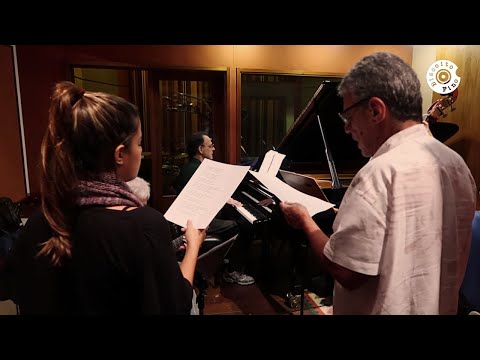
Dueto
Chico Buarque, Clara Buarque

Construção
Chico Buarque
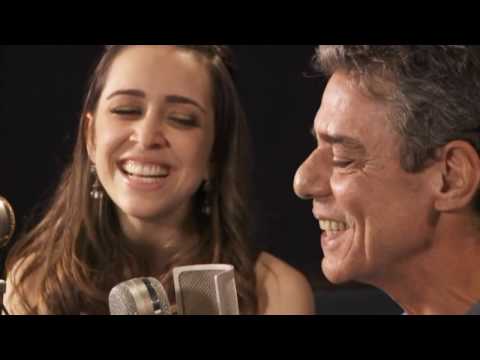
Mambembe
Chico Buarque, Roberta Sá

Tipo Um Baião
Chico Buarque
Deus Lhe Pague
Chico Buarque
Cotidiano
Chico Buarque
Desalento
Chico Buarque
Cordão
Chico Buarque
Samba De Orly
Chico Buarque
Minha Historia
Chico Buarque
Valsinha
Chico Buarque
Acalanto
Chico Buarque
Related Songs

Song for Sophie
Aura Dione

hoax
Taylor Swift
evermore
Taylor Swift, Bon Iver
closure
Taylor Swift
cowboy like me
Taylor Swift
ivy
Taylor Swift

Maggie Mae
The Beatles

Let Her Go
Passenger

Something To Someone
Max McNown

Let Her Go
Passenger

Welcome Home, Son
Radical Face
Si Tú Supieras Compañero
ROSALÍA
I See A Darkness
ROSALÍA

Vocea de care eu mor
Florin Cercel

Let Her Go
Passenger

Palomas Blancas
Natalia Lafourcade
Para Qué Sufrir
Natalia Lafourcade
Vámonos Negrito
Natalia Lafourcade
You Were Meant For Me
Jewel
You Were Meant For Me
Jewel