
Lyrics & Translation
Learning German with Jonas Monar's "Alle guten Dinge" is a fantastic way to engage with the language through music. The song's clear and repetitive chorus makes it easy to pick up key phrases about togetherness and support. Its heartfelt message and catchy pop melody make it a special and encouraging song for language learners.
Key Vocabulary
| Vocabulary | Meanings |
|---|---|
|
Dinge /ˈdɪŋə/ A1 |
|
|
gut /ɡuːt/ A1 |
|
|
passier'n (passieren) /paˈsiːrən/ A2 |
|
|
Welt /vɛlt/ A2 |
|
|
dreht (drehen) /ˈdreːən/ B1 |
|
|
weggeh'n (weggehen) /ˈvɛkˌɡeːən/ B1 |
|
|
tanzen /ˈtant͡sn̩/ A1 |
|
|
Reihe /ˈʁaɪ̯ə/ B1 |
|
|
schaffen /ˈʃafən/ B1 |
|
|
alleine /aˈlaɪ̯nə/ A1 |
|
|
bleiben /ˈblaɪ̯bən/ A1 |
|
|
hängen /ˈhɛŋən/ B1 |
|
|
Wand /vant/ A2 |
|
|
Boden /ˈboːdən/ A1 |
|
|
liegen /ˈliːɡən/ A1 |
|
💡 Which new word in “Alle guten Dinge” caught your eye?
📱 Open the app to check meanings, build sentences, and try them out in real convos!
Key Grammar Structures
-
Wenn ich von hier weggeh, dann mit dir
➔ Conditional Sentence Type 1 (Real Condition)
➔ This uses "wenn" (if) to introduce a condition. "Wenn" + present tense, then main clause with "dann" (then) showing the consequence. Shows something likely to happen. Note: In German, the verb often comes at the end of the subordinate clause introduced by "wenn". Also, the verb of the main clause after "dann" is typically in second position.
-
Und tanz ich aus der Reihe, mit dir, mit dir
➔ Inversion (Verb-Subject order) for Emphasis
➔ Normally, in a declarative sentence, the subject comes before the verb. Here, "tanz ich" (dance I) is an inversion used for emphasis and creates a slightly more poetic or emphatic effect, especially common in song lyrics. Instead of "Ich tanze...", it's "Tanze ich..."
-
Schaff ich's nicht alleine, dann mit dir
➔ Ellipsis (Omission of 'es') and Inversion
➔ "Schaff ich's" is a shortened and inverted form of "Schaffe ich es". The "es" is often dropped in colloquial German, and the verb-subject inversion adds emphasis. 'Schaffe ich es nicht alleine' would be the more standard sentence.
-
Und kann ich hier nicht bleiben, kommst du mit mir
➔ Conditional Sentence Type 1 (Real Condition) with Inversion
➔ Similar to the first example, this is a conditional sentence. However, instead of starting with "wenn", it starts with the verb "kann" (can), creating an inverted structure. This implies "Wenn ich hier nicht bleiben kann...".
-
Denn mit dir passier'n Alle guten Dinge, alle guten Dinge
➔ Dative Case and Verb Agreement (plural)
➔ "Mit dir" requires the dative case because "mit" (with) is a preposition that governs the dative. "Passier'n" is a shortened form of "passieren" (to happen) and is conjugated to agree with the plural subject "Alle guten Dinge" (all good things).
-
Es ist egal, was da draußen so abgeht
➔ Relative Clause with "was" and Impersonal "es ist egal"
➔ "Es ist egal" (it doesn't matter) is an impersonal expression. "Was da draußen so abgeht" is a relative clause. "Was" functions as both a relative pronoun and the subject/object within the clause, referring to whatever is happening outside. "Abgeht" is from the separable verb "abgehen" (to go on, to happen).
-
Weil sich heute die Welt nur für uns dreht
➔ Subordinate Clause with "weil", reflexive pronoun "sich"
➔ "Weil" (because) introduces a subordinate clause. The verb "dreht" (turns) requires the reflexive pronoun "sich" because it's a reflexive verb ("sich drehen" - to turn oneself/to revolve). The word order is also typical of a subordinate clause, with the conjugated verb at the end.
Same Singer

Related Songs

I'm The One
Joalin

Movin' On
KALLY'S Mashup Cast, Maia Reficco

BUNNY
Sofie Dossi

Look Who's Back
Jenna Davis

Feeling Some Kinda Way
Kylie Cantrall
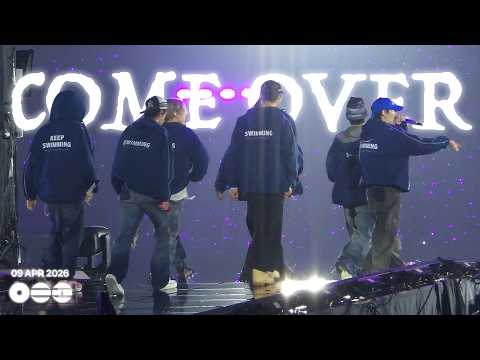
COME OVER
BTS

Hush
Muse, Ellie Goulding

Don't Let Me Down
The Chainsmokers

Bolero
Shane, Molly Yam

ビターバカンス
Mrs. GREEN APPLE

Lonely...But not Alone
モーニング娘。'26

是非に及ばず
乃木坂46

Legends Never Die
Against The Current

Normal No More
TYSM

Count on Me
Bruno Mars

That’s what I like
Bruno Mars

That Girl
Olly Murs

Golden
MilkyyMelodies, ForticGX

hot girl bummer
blackbear

hot girl bummer
blackbear