
Lyrics & Translation
Key Vocabulary
| Vocabulary | Meanings |
|---|---|
|
rufst rufst A2 |
|
|
fragst fragst A2 |
|
|
kommst kommst A2 |
|
|
spät shpɛːt A1 |
|
|
verstehe fɛɐ̯ˈʃteːə A2 |
|
|
Handy ˈhandi A1 |
|
|
Candy ˈkandi A1 |
|
|
Snacks snaks A1 |
|
|
Mama ˈmaːma A1 |
|
|
drücken ˈdʁʏkən A2 |
|
|
Kickbille ˈkɪkˌbɪlə B1 |
|
|
brau brau B1 |
|
|
Akku ˈaku A2 |
|
|
Strom ʃtʁoːm A2 |
|
|
verbrennen fɛɐ̯ˈbʁɛnən B1 |
|
“rufst, fragst, kommst” – got them all figured out?
⚡ Dive into vocabulary challenges in the app and lock in your knowledge right after jamming to "Bungalow"
Key Grammar Structures
-
Du rufst mich an und fragst mich, wie es mir geht.
➔ Present tense (2nd person singular) + coordinated clauses + subordinate clause introduced by "wie" (how).
➔ The verb ""rufst"" is in the present tense, second‑person singular, and ""wie"" introduces a subordinate clause expressing a manner.
-
Ich rufe dich an und ich frage dich, wie es dir geht.
➔ Present tense (1st person singular) + coordinated clauses + subordinate clause with "wie".
➔ The verb ""rufe"" is in the present tense, first‑person singular; ""wie"" again introduces a “how” clause.
-
Es tut mir leid, wenn ich das alles nicht verstehe.
➔ Main clause + conditional "wenn" clause (if) expressing a hypothetical situation.
➔ ""wenn"" introduces a conditional clause; the verb ""verstehe"" is in present tense, indicating a present‑time uncertainty.
-
Es tut dir leid, wenn ich nach Hause gehe.
➔ Main clause + "wenn" conditional clause; dative object "dir" with the verb "tut leid".
➔ ""dir"" is a dative pronoun meaning "to you"; the clause "wenn ich nach Hause gehe" uses present tense "gehe".
-
Komm vorbei, mein Blau.
➔ Imperative mood (2nd person singular) with a vocative noun phrase.
➔ ""Komm"" is the imperative form of "kommen" meaning “come”; "mein Blau" addresses the listener.
-
Ich habe Snacks für die Mama.
➔ Present perfect "haben + accusative" to express possession; preposition "für" + accusative object.
➔ ""habe"" (from "haben") is used with the accusative "Snacks" to mean “I have snacks”. ""für"" introduces the beneficiary "die Mama".
-
Ich brauche mehr Strom.
➔ Simple present of modal‑like verb "brauchen" (to need) with accusative object.
➔ ""brauche"" (from "brauchen") is a regular verb in present tense; "mehr Strom" is the accusative object meaning “more electricity”.
-
Dann rufst du an auf meinem Handy.
➔ Temporal adverb "Dann" (then) + present tense verb + prepositional phrase "auf meinem Handy".
➔ ""Dann"" signals a sequence; "rufst" is the present‑tense 2nd‑person singular of "rufen"; "auf meinem Handy" means “on my phone”.
-
Wir drücken schon Schola.
➔ Present tense plural subject "Wir" + verb "drücken"; adverb "schon" indicating already.
➔ ""drücken"" is the present‑tense form for the plural subject "Wir"; "schon" emphasizes that the action is already happening.
Album: Magic Life
I ♥ Stress
Bilderbuch
Magic Life
Bilderbuch
Bungalow
Bilderbuch
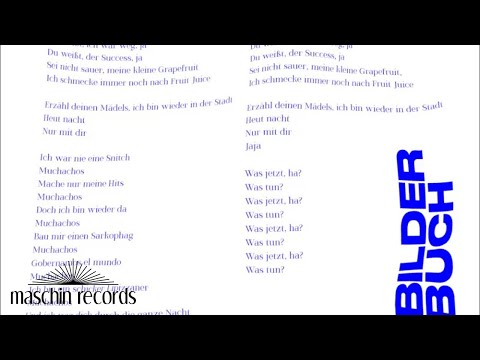
Erzähl Deinen Mädels Ich Bin Wieder In Der Stadt
Bilderbuch
Baba
Bilderbuch
Babylon
Bilderbuch
Erzähl deinen Mädels ich bin wieder in der Stadt
Bilderbuch, Kersha Bailey

Erzähl Deinen Mädels Ich Bin Wieder In Der Stadt
Bilderbuch
Babylon
Bilderbuch
Babylon
Bilderbuch
Same Singer

Gigolo
Bilderbuch
Sandwishes
Bilderbuch
Lounge 2.0
Bilderbuch
Maschin
Bilderbuch
Mein Herz Bricht
Bilderbuch
Memory Card
Bilderbuch
I ♥ Stress
Bilderbuch
Magic Life
Bilderbuch
Bungalow
Bilderbuch
Erzähl Deinen Mädels Ich Bin Wieder In Der Stadt
Bilderbuch
Magic Life
Bilderbuch
Baba
Bilderbuch
Babylon
Bilderbuch
Erzähl deinen Mädels ich bin wieder in der Stadt
Bilderbuch, Kersha Bailey
Erzähl Deinen Mädels Ich Bin Wieder In Der Stadt
Bilderbuch

Magic Life
Bilderbuch
sneakers4free
Bilderbuch
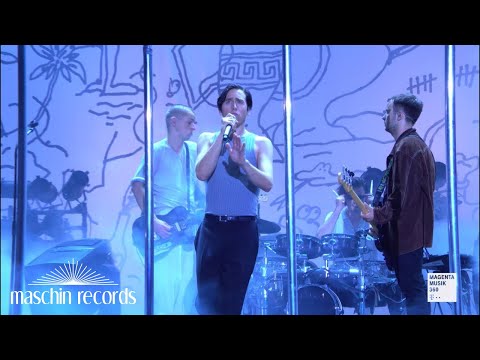
Babylon
Bilderbuch
Babylon
Bilderbuch
Babylon
Bilderbuch
Related Songs
The Way It Is
The Strokes
I Can't Win
The Strokes
You Talk Way Too Much
The Strokes
Lemon Tang
Hearts2Hearts
Heat Waves
Glass Animals
Darling I Do
Landon Pigg, Lucy Schwartz
GROSEILLE
Timar
Mention Me
Cortis
GREENGREEN
CORTIS
Call Me Out
Loving Caliber
I Can't Find You
Loving Caliber
Wrong
Loving Caliber
Stay Here With Me
Loving Caliber, Viktor Pedersen
You Got Me Too
Loving Caliber
Plane Tickets
Loving Caliber
My Skin's On Fire
Loving Caliber
Those Eyes
New West
Sunset
Nerd Connection
なんもねえ
Wasureranneyo

REDRED
CORTIS