
Lyrics & Translation
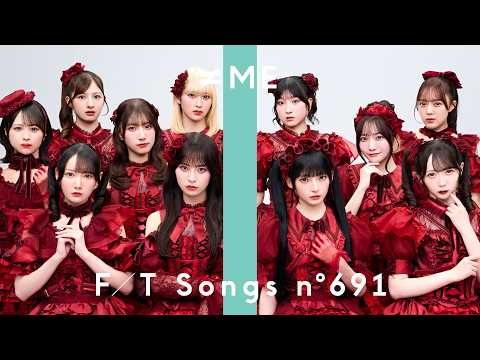
Discover the poignant world of ≠ME's "モブノデレラ", a song that gives voice to the often-overlooked 'mob' characters in life's stories. Through its evocative lyrics and melody, this song offers a unique perspective on longing and self-discovery, inviting listeners to explore the nuances of Japanese language and culture.
Key Vocabulary
| Vocabulary | Meanings |
|---|---|
|
子供 (kodomo) /ko.do.mo/ A1 |
|
|
夢 (yume) /ju.me/ A2 |
|
|
世界 (sekai) /se.ka.i/ A2 |
|
|
色 (iro) /i.ro/ A2 |
|
|
視線 (shisen) /ʃi.seŋ/ B1 |
|
|
願う (negau) /ne.ɡa.u/ B1 |
|
|
嫉妬 (shitto) /ʃi.tto/ B1 |
|
|
王子 (ouji) /o.u.d͡ʑi/ B1 |
|
|
揺れる (yureru) /ju.re.ru/ B1 |
|
|
選ばれる (erabareru) /e.ra.ba.re.ru/ B2 |
|
|
不幸 (fukou) /fu.ko.u/ B2 |
|
|
孤独 (kodoku) /ko.do.ku/ B2 |
|
|
魔法 (mahou) /ma.ho.u/ B2 |
|
|
未来 (mirai) /mi.ra.i/ B2 |
|
|
主人公 (shujinkou) /ʃu.d͡ʑiŋ.ko.u/ B2 |
|
|
穴 (ana) /a.na/ A2 |
|
|
歩く (aruku) /a.ru.ku/ A2 |
|
|
奪う (ubau) /u.ba.u/ B2 |
|
Are there any new words in “モブノデレラ” you don’t know yet?
💡 Hint: 子供 (kodomo), 夢 (yume)… Jump into the app and start learning now!
Key Grammar Structures
-
子供の頃も確かそうだった
➔ Past Tense (だった)
➔ The use of "だった" indicates a statement about the past. Here, it describes how things were in the speaker's childhood.
-
誰かの夢が叶うたびに
➔ 「たびに」 (tabi ni) - Every time/Each time
➔ The grammar point 「たびに」 means 'every time' or 'each time.' In this context, it means every time someone else's dream comes true.
-
世界はいつもカラフルだった
➔ Topic marker (は) + Past Tense (だった)
➔ "は" marks "世界 (sekai) - world" as the topic of the sentence. "だった" indicates that the world *was* always colorful, implying a contrast with the present.
-
滲んだ 視線の中
➔ Adjective modifying a noun (滲んだ 視線)
➔ "滲んだ (nijinda)" is the past form of the verb "滲む (nijimu) - to blur, to run". It's acting as an adjective here, modifying the noun "視線 (shisen) - gaze, line of sight".
-
願っていいのなら
➔ Conditional form with 「なら」 (nara)
➔ 「なら」 indicates a hypothetical condition. "願っていいのなら" translates to "if it's okay to wish" or "if I could have my wish". It sets up a condition under which the speaker's desire would be possible.
-
奪い去って走る 勇気があれば
➔ Conditional form with 「ば」 (ba)
➔ 「ば」 expresses a hypothetical condition. "あれば (areba)" is the conditional form of "ある (aru) - to have". The sentence means "if I had the courage to steal and run away..."
-
何回も コンティニューしても
➔ 「~ても」 (te mo) - Even if/Even though
➔ 「~ても」 indicates a concession or exception. In this context, it means "even if I continue many times..."
Album: モブノデレラ/神様の言うとーり!

Same Singer



Related Songs

Rhythm Divine
Enrique Iglesias

Best Friend
Sofia Camara

Before The Light Goes
Melody Blush

Babydoll
Dominic Fike

Nevada
Vicetone, Cozi Zuehlsdorff

Nevada
Vicetone, Cozi Zuehlsdorff

Kings & Queens
Ava Max
Fake Happy
Paramore

Hard To Love
ROSÉ
¿Cómo Así?
Kali Uchis

Diosa
Kali Uchis

Te Mata
Kali Uchis

Dame Beso // Muévete
Kali Uchis
La Chica de Humo
Emmanuel
Just The Way You Are
Milky

Stay
Zedd, Alessia Cara

Perfect
Ed Sheeran

Girls Like You
Maroon 5, Cardi B

Shape of You
Ed Sheeran

Nothing's Gonna Change My Love For You
Isaac Hong, Park Jeong Woo