
Lyrics & Translation
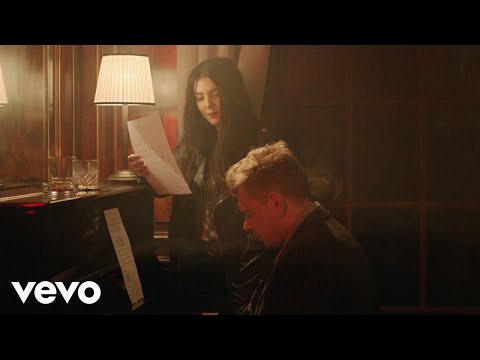
Immerse yourself in the melancholic world of "Pleurs de fumoir," a poignant French pop duet by Hoshi and Benjamin Biolay. This song offers a glimpse into raw emotions and shared experiences, allowing listeners to connect with themes of vulnerability and companionship. Through its evocative lyrics and gentle melody, you can explore the nuances of human connection and find beauty in shared moments of reflection.
Key Vocabulary
| Vocabulary | Meanings |
|---|---|
|
cœur /kœʁ/ A1 |
|
|
poumons /pu.mɔ̃/ A2 |
|
|
odeur /ɔ.dœʁ/ A2 |
|
|
clope /klɔp/ B1 |
|
|
fume /fym/ A2 |
|
|
rumeurs /ʁy.mœʁ/ B1 |
|
|
boisson /bwa.sɔ̃/ A2 |
|
|
heures /œʁ/ A1 |
|
|
peur /pœʁ/ A2 |
|
|
soir /swaʁ/ A1 |
|
|
histoires /is.twaʁ/ A2 |
|
|
comptoir /kɔ̃.twaʁ/ B1 |
|
|
bagarres /ba.ɡaʁ/ B2 |
|
|
bar /baʁ/ A1 |
|
|
trottoir /tʁɔ.twaʁ/ A2 |
|
|
pleurs /plœʁ/ B1 |
|
|
fumoir /fy.mwaʁ/ B2 |
|
|
forêt /fɔ.ʁɛ/ A2 |
|
|
charmante /ʃaʁ.mɑ̃t/ B1 |
|
|
feu /fø/ A1 |
|
|
mal /mal/ A1 |
|
🚀 "cœur", "poumons" – from “Pleurs de fumoir” still a mystery?
Learn trendy vocab – vibe with music, get the meaning, and use it right away without sounding awkward!
Key Grammar Structures
-
Oh, tu sais, mon cœur / Est dans le même état que mes poumons
➔ Comparison using 'le même... que'
➔ Expresses that something is in the same condition as something else. "Le même état que" means "the same state as".
-
Tu connais l'odeur / D'une clope, incrustée sur nos blousons
➔ Past participle used as an adjective
➔ "Incrustée" (encrusted) is the past participle of "incruster" and modifies "l'odeur". It describes the smell as being embedded in the jackets.
-
Je fume les rumeurs / Elles finiront noyées dans ma boisson
➔ Future tense (futur simple)
➔ "Finiront" is the third-person plural future simple of the verb "finir". It indicates an action that will happen in the future.
-
Et ça fait des heures / Que je t'attendais pour une discussion
➔ Expression of duration with 'ça fait... que'
➔ The structure "ça fait + [time period] + que + [clause]" indicates how long something has been happening. "Ça fait des heures que" means "It has been hours that".
-
On s'offrira à boire / Pour battre notre peur du soir
➔ Reflexive verb in the future tense ('s'offrir')
➔ "S'offrira" is the future tense form of the reflexive verb "s'offrir", meaning "to treat oneself" or "to offer oneself". The context implies 'we will treat ourselves to drinks'.
-
J'y ai laissé mon cœur / Ma queue, mon âme, ma pauvre paire de poumons
➔ Use of the pronoun 'y'
➔ The pronoun "y" replaces a place or a thing introduced by the preposition "à", "chez", "dans", etc. Here, "j'y ai laissé" means "I left it there", where "y" refers to "la forêt de bourbon" from the previous line.
-
Mais tu me regardes d'une bien charmante façon
➔ Adverbial phrase using 'd'une ... façon'
➔ The phrase "d'une bien charmante façon" is an adverbial phrase that modifies the verb "regardes". It means "in a very charming way".
-
Si ce soir, ce soir, je meurs / Viens nous donner la plus extrême des onctions
➔ Conditional sentence with present tense in the 'si' clause and imperative in the main clause
➔ In this type of conditional sentence, the present tense in the 'si' clause expresses a possible condition, and the imperative in the main clause expresses a command or request if that condition is met. "Viens" is the imperative of "venir".
Same Singer

Comment je vais faire
Hoshi
Lola
Superbus, Hoshi, Nicola Sirkis
Pleurs de fumoir
Hoshi, Benjamin Biolay
Et même après je t'aimerai
Hoshi

Manège à trois
Hoshi
Related Songs
My Skin's On Fire
Loving Caliber
Don't You Wanna Stay
Loving Caliber

Those Eyes
New West

We Don't Talk Anymore
Charlie Puth, Selena Gomez

Monster
Shawn Mendes, Justin Bieber

Never Be the Same
Camila Cabello

The 30th
Billie Eilish

Ordinary
Alex Warren

Girls Wanna Have Fun
Josh Fawaz

Gimme Dat Love
(G)I-DLE
花咲く道
ME:I
未完成婚姻論
超学生, マサ

しおざきわんだーらんど
M!LK, 塩﨑太智

des fleurs
Tove Lo, Stromae
WOKE UP IN TOKYO
BABYMONSTER
No Promises
Shayne Ward

No promises
Shayne Ward

DREAMERS
Jungkook, Fahad Al Kubaisi

Em Mới Là Người Yêu Anh
MIN
Attention
Charlie Puth