
Lyrics & Translation
Dive into the Spanish lyrics of Tito Double P's "Blanca, Rosita y María," a contemporary Regional Mexican track that paints a vibrant picture of a night with friends. Learning this song is a fun way to grasp modern slang and conversational Spanish in a catchy, narrative context.
Key Vocabulary
| Vocabulary | Meanings |
|---|---|
|
noche /ˈnotʃe/ A1 |
|
|
amiga /aˈmiɣa/ A1 |
|
|
vida /ˈbiða/ A1 |
|
|
coqueta /koˈketa/ B2 |
|
|
baño /ˈbaɲo/ A2 |
|
|
maquillar /makiˈʎaɾ/ B2 |
|
|
sorprender /sorˈpɾendeɾ/ B2 |
|
|
fantasía /fantaˈsia/ B1 |
|
|
naturalita /natuɾaˈlita/ C1 |
|
|
morenita /moɾeˈnita/ B1 |
|
|
grupo /ˈɡɾupo/ A2 |
|
|
poner /poˈneɾ/ A2 |
|
|
bonita /boˈnita/ A1 |
|
|
antojar /antoˈxaɾ/ C1 |
|
|
mamita /maˈmita/ B1 |
|
“noche, amiga, vida” – got them all figured out?
⚡ Dive into vocabulary challenges in the app and lock in your knowledge right after jamming to "Blanca, Rosita y María"
Key Grammar Structures
-
Esta noche vo'a mojar el broche en el Porsche
➔ Future tense (informal): "vo'a" (voy a)
➔ "vo'a" is a colloquial shortening of "voy a", meaning "I am going to". It expresses an intention to do something in the near future. In formal Spanish, "voy a" would be preferred.
-
Traigo una morena, porque güera la de anoche
➔ Use of "porque" (because) to explain the reason. Using "la de" to refer to the previous girl.
➔ "porque" introduces the reason why he brought a "morena" (brunette): because the girl from last night ("la de anoche") was a "güera" (blonde). "la de" acts as a pronoun replacing "la chica de".
-
Esa, la que no quería, qué bonita es esta vida, ay, mamita
➔ Relative clause ("la que no quería") modifying "esa". Exclamatory sentence structure.
➔ "la que no quería" is a relative clause referring to a previously mentioned woman ("esa"), describing her as the one he didn't want before. "Qué bonita es esta vida" is an exclamatory sentence expressing his surprise and delight.
-
Blanca es muy coqueta, se va al baño y se maquilla
➔ Reflexive verbs: "se va" and "se maquilla" (she goes and she puts makeup on herself).
➔ The pronoun "se" indicates that the subject (Blanca) is performing the action on herself. "Se va" means "she goes (away)", and "se maquilla" means "she puts makeup on herself".
-
María me cumple mis fantasías y eso que es naturalita
➔ Use of "y eso que" to express contrast or concession.
➔ "Y eso que" introduces a fact that seems to contradict or make surprising the previous statement. It implies that despite being "naturalita" (natural, not artificial), María still fulfills his fantasies.
-
Como te vo'a poner al rato
➔ Future tense (informal): "vo'a" (voy a). The use of 'te' as direct object pronoun
➔ "vo'a" is a colloquial shortening of "voy a", meaning "I am going to". "te" is a direct object pronoun refering to 'you'. The complete sentence (with formal conjugation) will be something like: "Cómo te voy a poner al rato" (How am I going to place/put you in a moment)
Related Songs
Nadie Como Tú
Wisin & Yandel, Don Omar
Dile
Don Omar

Que Se Mueran
Romeo Santos

Me Gustas Tú
Manu Chao

Macarena

Ya no Somos ni Seremos
Christian Nodal
ALCOBA
Cris MJ, Clarent

Criminal
Natti Natasha, Ozuna
EXCESO DE PUTERÍA
l0rna, Kristina
TU SANCHO
Fuerza Regida

Pegao
Wisin & Yandel

GÁLDAR & AL GOLPITO
Quevedo, Tonny Tun Tun, Nueva Línea

La Guaracha (Oh Oh Oh)
Manuel Turizo, Martinwhite
Una chica está llorando
Los Acosta
Contra el dragón
Los Acosta

En algún lugar
LOS ACOSTA
En Aquel Café
Los Acosta

En Algún Lugar
Los Acosta

Ya Borré Tu Contacto
Los Acosta
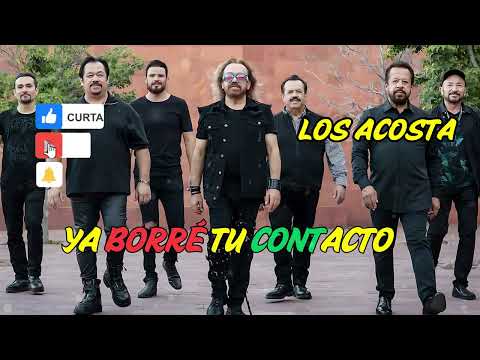
YA BORRÉ TU CONTACTO
LOS ACOSTA