
Lyrics & Translation
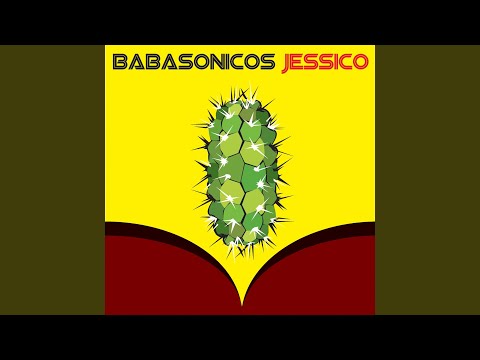
Dive into the sound of Babasónicos with their track "Fizz" from the landmark album *Jessico*. This song exemplifies the band's successful shift towards a more accessible Pop Rock sound in the early 2000s, making it a perfect entry point to understand the evolution of contemporary Argentine rock music.
Key Vocabulary
| Vocabulary | Meanings |
|---|---|
|
duelo /ˈdwe.lo/ B2 |
|
|
vedette /beˈdet/ C1 |
|
|
pluma /ˈplu.ma/ A2 |
|
|
ira /ˈi.ra/ B2 |
|
|
taco /ˈta.ko/ B1 |
|
|
conciencia /konˈθjen.θja/ B2 |
|
|
atormentar /a.tor.menˈtar/ C1 |
|
|
huir /uˈiɾ/ B2 |
|
|
farsante /faɾˈsan.te/ C1 |
|
|
espuma /esˈpu.ma/ B1 |
|
|
dandi /ˈdan.di/ C1 |
|
|
suburbio /suˈβuɾ.bjo/ B2 |
|
|
cemento /θeˈmen.to/ A2 |
|
|
luces /ˈlu.ses/ A2 |
|
|
trampa /ˈtɾam.pa/ B2 |
|
|
puñal /puˈɲal/ C1 |
|
|
corriente /koˈrjen.te/ B2 |
|
🧩 Unlock "Fizz" – every sentence and word gets easier with the app!
💬 Don’t let tough words stop you – the app’s got your back!
Key Grammar Structures
-
Le clavó su taco aguja
➔ Use of indirect object pronoun 'le' + preterite tense verb 'clavó'
➔ The pronoun 'le' refers to the person receiving the action, while 'clavó' (he/she nailed) is in past tense to describe a completed action.
-
No conecta el pasado
➔ Use of 'no' for negation + present tense verb
➔ 'no conecta' negates the verb 'conectar', showing that the subject is not connecting with the past.
-
Su conciencia la atormenta
➔ Object pronoun placement before verb
➔ The pronoun 'la' (her) goes before 'atormenta' (torments), showing direct object placement in Spanish sentence structure.
-
Invitame a pasar
➔ Affirmative imperative with attached pronoun
➔ The verb 'invita' (invite) is in imperative form, with 'me' attached to indicate 'invite me'.
-
Del suburbio que se escapa
➔ Relative clause with reflexive verb
➔ The clause 'que se escapa' describes 'suburbio'; 'se escapa' (escapes) uses the reflexive pronoun 'se'.
-
Seducido cae en la trampa
➔ Past participle used as adjective
➔ 'Seducido' (seduced) functions as an adjective modifying the subject before the verb 'cae' (falls).
-
Sacan un puñal
➔ Present tense for narrative immediacy
➔ The present tense 'sacan' gives a vivid sense of action, making the scene feel active and immediate.
-
Piensa en ella
➔ Use of preposition 'en' with verb 'pensar'
➔ In Spanish, 'pensar' meaning 'to think about' requires 'en' before the object.
-
No hay marcha atrás
➔ Impersonal expression with 'hay'
➔ 'Hay' means 'there is/are' in an impersonal form, expressing existence or presence; 'No hay marcha atrás' means 'there is no turning back'.
Album: Jessico
Los Calientes
Babasonicos
Fizz
Babasónicos
Los Calientes
Babasónicos
La Fox
Babasónicos, Adrián Rodríguez

El loco
Babasonicos
Yoli
Babasónicos
Same Singer

Microdancing
Babasonicos
El ídolo
Babasonicos
Pijamas
Babasonicos
La Lanza
Babasónicos

Carismático
Babasonicos
Yegua
Babasonicos

Carismático
Babasónicos
Carismático
Babasónicos

Risa
Babasónicos

Pistero
Babasónicos

Mareo
Babasónicos

Sin mi diablo
Babasónicos, Adrián Rodríguez

Curtis
Babasónicos

La Puntita
Babasónicos

Puesto
Babasonicos
Fizz
Babasónicos
Los Calientes
Babasónicos
La Fox
Babasónicos, Adrián Rodríguez
El loco
Babasonicos
Yoli
Babasónicos
Related Songs

My Skin's On Fire
Loving Caliber

Don't You Wanna Stay
Loving Caliber

Those Eyes
New West

We Don't Talk Anymore
Charlie Puth, Selena Gomez

Monster
Shawn Mendes, Justin Bieber

Never Be the Same
Camila Cabello

The 30th
Billie Eilish

Ordinary
Alex Warren
Girls Wanna Have Fun
Josh Fawaz

Gimme Dat Love
(G)I-DLE

花咲く道
ME:I

未完成婚姻論
超学生, マサ

しおざきわんだーらんど
M!LK, 塩﨑太智

des fleurs
Tove Lo, Stromae
WOKE UP IN TOKYO
BABYMONSTER
No Promises
Shayne Ward

No promises
Shayne Ward

DREAMERS
Jungkook, Fahad Al Kubaisi

Em Mới Là Người Yêu Anh
MIN

Attention
Charlie Puth