
Lyrics & Translation
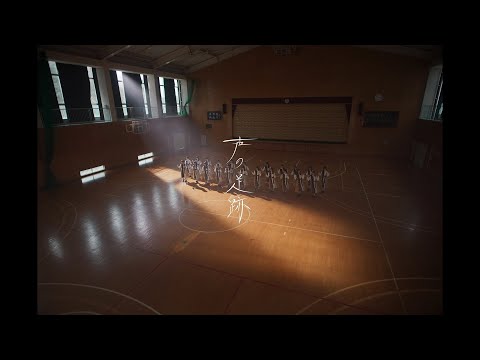
“声の足跡” (Voice's Footprints) by Hinatazaka46 is an excellent song for Japanese language learners. Its lyrics delve into themes of self-discovery and the nuances of expressing one's true feelings, offering insights into common expressions related to youth and personal growth. The song's connection to a drama further enriches its context, making it a special piece for cultural and linguistic immersion. The numerous subtle references in its music video also provide a deeper appreciation of Japanese idol culture and Hinatazaka46's unique narrative.
Key Vocabulary
| Vocabulary | Meanings |
|---|---|
|
言われる /iwa.reru/ B1 |
|
|
気づいて /ki.zu.i.te/ A2 |
|
|
やりたい /ya.ri.ta.i/ A2 |
|
|
若さ /wa.ka.sa/ B1 |
|
|
傷ついて /kizu.tsui.te/ B1 |
|
|
自己嫌悪 /jiko.kon'o/ C1 |
|
|
大人 /o.to.na/ A2 |
|
|
悩んで /na.yon.de/ B1 |
|
|
声 /ko.e/ A2 |
|
|
届いた /to.do.i.ta/ B1 |
|
|
風 /kaze/ A2 |
|
|
空 /sora/ A2 |
|
|
飛行機雲 /hi.kou.ki.gun/ C1 |
|
|
横切って /yoko.ki.tte/ B2 |
|
|
意地 /i.ji/ B2 |
|
Are there any new words in “声の足跡” you don’t know yet?
💡 Hint: 言われる, 気づいて… Jump into the app and start learning now!
Key Grammar Structures
-
誰かに何か言われる度にそうじゃないんだと言いたくなる
➔ Usage of 〜度に to indicate 'each time' or 'whenever'.
➔ The phrase "〜度に" (〜どに) indicates that the action occurs each time a certain condition is met.
-
信じることでいつも傷ついて 自己嫌悪に陥ってしまう
➔ Use of 〜ことで to indicate 'by doing' or 'because of'.
➔ The structure "〜ことで" means 'by' or 'through' doing something, indicating causality or means.
-
あの頃悩んでいた自分に言いたい
➔ Use of 〜に to indicate the target of an action, here meaning 'to' or 'at' the person or thing.
➔ The particle "〜に" indicates the direction or target of an action, often translated as 'to' or 'at'.
-
街のノイズに掻き消されずに風に運ばれて・・・
➔ Use of 〜に for indicating 'by' or 'due to' an agent or cause, combined with passive constructions.
➔ The phrase "〜に掻き消されずに" uses the negative form to mean 'without being drowned out by'.
-
声は届いたか?
➔ Interrogative form using か to turn a statement into a yes/no question.
➔ The particle "か" at the end of a sentence indicates a question, similar to a question mark in English.
-
降り出した雨の中ではっきりと・・・
➔ Use of 〜中で to indicate 'during' or 'inside' of a certain event or period.
➔ The phrase "〜中で" indicates that something happens within a certain period or space, meaning 'during' or 'inside'.
-
足跡よ
➔ Use of the vocative particle (助詞) よ at the end of a noun to invoke or emphasize it.
➔ The particle "よ" is used to call attention or emphasize a noun, often to personify or give emotional force.
Album:


Same Singer




Related Songs

Rhythm Divine
Enrique Iglesias

Best Friend
Sofia Camara

Before The Light Goes
Melody Blush

Babydoll
Dominic Fike

Nevada
Vicetone, Cozi Zuehlsdorff

Nevada
Vicetone, Cozi Zuehlsdorff

Kings & Queens
Ava Max

Fake Happy
Paramore

Hard To Love
ROSÉ

¿Cómo Así?
Kali Uchis

Diosa
Kali Uchis

Te Mata
Kali Uchis

Dame Beso // Muévete
Kali Uchis
La Chica de Humo
Emmanuel

Just The Way You Are
Milky

Stay
Zedd, Alessia Cara

Perfect
Ed Sheeran

Girls Like You
Maroon 5, Cardi B

Shape of You
Ed Sheeran

Nothing's Gonna Change My Love For You
Isaac Hong, Park Jeong Woo