
Lyrics & Translation
Dive into the captivating world of Junior H's "ENTRE NOSOTROS," a vibrant example of the corridos tumbados genre that masterfully blends traditional Mexican sounds with modern urban influences. Through its evocative lyrics and emotional depth, this song offers a unique window into contemporary Spanish, rich with expressions of desire and the complexities of fleeting connections. Learning the language through "ENTRE NOSOTROS" will not only enhance your appreciation for Junior H's artistry but also immerse you in a modern cultural narrative.
Key Vocabulary
| Vocabulary | Meanings |
|---|---|
|
faldita faldita A2 |
|
|
cortita cortita A2 |
|
|
niña niña A1 |
|
|
bonita bonita A1 |
|
|
princesa princesa A2 |
|
|
cama cama A1 |
|
|
diabla diabla B1 |
|
|
domina domina B2 |
|
|
copas copas A2 |
|
|
pierde pierde A2 |
|
|
pena pena A2 |
|
|
jala jala B1 |
|
|
cadenas cadenas B1 |
|
|
cortinas cortinas A2 |
|
|
luna luna A1 |
|
|
llena llena A2 |
|
|
noche noche A1 |
|
|
olvida olvida A2 |
|
|
bailemos bailemos B1 |
|
|
peligroso peligroso B1 |
|
Do you remember what “faldita” or “cortita” means in "ENTRE NOSOTROS"?
Hop into the app to practice now – quizzes, flashcards, and native-like pronunciation are waiting!
Key Grammar Structures
-
niña no sé por qué estás tan bonita
➔ Indirect question with 'por qué'
➔ The phrase "no sé ""por qué"" introduces an indirect question meaning “I don’t know why”.
-
te vi como princesita en mi cama
➔ Simile with 'como'
➔ The word "como" links the verb "vi" with the image "princesita", forming a simile: "I saw you *like* a little princess".
-
una diabla que me domina
➔ Relative clause introduced by 'que'
➔ The clause ""que me domina"" describes "una diabla"; "que" functions as a relative pronoun meaning “who/that”.
-
dos copas de más
➔ Expression of excess with 'de más'
➔ The phrase ""de más"" after a noun ("copas") means “more than needed”, i.e., “two drinks *too many*”.
-
se monta en mi cama
➔ Reflexive verb 'montarse' used as pronominal
➔ The reflexive pronoun "se" indicates that the subject performs the action on itself: "he/she gets on my bed".
-
Jala mis cadenas
➔ Imperative affirmative form
➔ ""Jala"" is the informal imperative of "jalar" meaning “pull”; it commands the listener to pull the chains.
-
Abre las cortinas
➔ Imperative affirmative (second‑person singular)
➔ ""Abre"" is the informal second‑person singular imperative of "abrir"; it tells someone to open the curtains.
-
nada serio pues soy peligroso
➔ Conjunction 'pues' meaning 'because'
➔ The word ""pues"" connects the clause "nada serio" with "soy peligroso", giving the meaning “because I am dangerous”.
-
si te enamoras no fue culpa mía
➔ Conditional clause with past simple in the main clause
➔ "si" introduces a condition; the result clause uses "no fue culpa mía" (past simple) to express that the blame was not yours in the past.
-
vas a terminar dañada
➔ Future periphrastic construction with 'ir a' + infinitive
➔ "vas a" is the 2nd‑person singular of "ir" + "a", followed by the infinitive "terminar"; it means “you are going to finish damaged”.
Related Songs
Nadie Como Tú
Wisin & Yandel, Don Omar

Dile
Don Omar

Que Se Mueran
Romeo Santos

Me Gustas Tú
Manu Chao
Macarena

Ya no Somos ni Seremos
Christian Nodal

ALCOBA
Cris MJ, Clarent

Criminal
Natti Natasha, Ozuna
EXCESO DE PUTERÍA
l0rna, Kristina
TU SANCHO
Fuerza Regida

Pegao
Wisin & Yandel

GÁLDAR & AL GOLPITO
Quevedo, Tonny Tun Tun, Nueva Línea

La Guaracha (Oh Oh Oh)
Manuel Turizo, Martinwhite
Una chica está llorando
Los Acosta
Contra el dragón
Los Acosta
En algún lugar
LOS ACOSTA
En Aquel Café
Los Acosta

En Algún Lugar
Los Acosta

Ya Borré Tu Contacto
Los Acosta
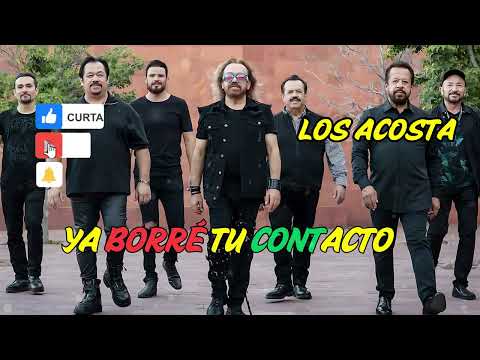
YA BORRÉ TU CONTACTO
LOS ACOSTA