
Lyrics & Translation
Discover the heartfelt power of "El último en la Fila" by the legendary Vicente Fernández! This moving mariachi ballad is an excellent way to immerse yourself in Spanish, offering rich vocabulary related to love, humility, and human connection. The song's profound message about valuing the overlooked and its beautiful poetic imagery make it a special and culturally significant piece for any language learner.
Key Vocabulary
| Vocabulary | Meanings |
|---|---|
|
tratar tɾaˈtaɾ A2 |
|
|
fila ˈfila A1 |
|
|
peor ˈpeoɾ A2 |
|
|
amar aˈmaɾ A2 |
|
|
destino desˈtino B1 |
|
|
asustar asuˈstaɾ B1 |
|
|
lodo ˈloðo A2 |
|
|
diamantes djaˈmantes B1 |
|
|
brillar bɾiˈʎaɾ A2 |
|
|
constatar konsˈtataɾ B2 |
|
|
ignorar iɣnoˈɾaɾ B1 |
|
|
adorar aðoˈɾaɾ B1 |
|
|
altar alˈtaɾ B1 |
|
🧩 Unlock "El último en la Fila" – every sentence and word gets easier with the app!
💬 Don’t let tough words stop you – the app’s got your back!
Key Grammar Structures
-
Que tal si tratas al último en la fila,
➔ Conditional mood (si + subjunctive) + Direct Object Pronoun
➔ The phrase uses the conditional 'si' (if) followed by the subjunctive mood 'tratas' (you treat) to express a hypothetical situation. 'al último' is the direct object, meaning 'the last one'. The sentence asks 'What if you treat the last one in line?'
-
Lo dijo Cristo y lo puedes constatar
➔ Past Definite + Personal 'a' (implied) + Modal Verb + Infinitive
➔ This sentence states a fact ('Christ said it') and then expresses the ability to verify it ('you can confirm it'). 'Lo' is a direct object pronoun referring to what Christ said. 'Puedes constatar' uses the modal verb 'poder' (can) + the infinitive 'constatar' (to confirm).
-
Si bajo el lodo a veces hay diamantes,
➔ Conditional Clause + Inversion + Existential 'hay'
➔ This sentence uses a conditional structure ('si' - if) to introduce a surprising possibility. The phrase 'bajo el lodo' (under the mud) is followed by inversion ('a veces hay') to emphasize the existence of diamonds. 'Hay' is the impersonal form of 'haber' meaning 'there is/are'.
-
Abre los ojos, te invito a comprobar
➔ Imperative Mood + Direct Object Pronoun + Personal Pronoun + Verb + Infinitive
➔ This is a direct command ('Abre los ojos' - Open your eyes). 'Te invito' means 'I invite you' and is followed by 'a comprobar' (to verify), creating a phrase meaning 'I invite you to verify'.
Related Songs
Nadie Como Tú
Wisin & Yandel, Don Omar

Dile
Don Omar

Que Se Mueran
Romeo Santos

Me Gustas Tú
Manu Chao

Macarena

Ya no Somos ni Seremos
Christian Nodal

ALCOBA
Cris MJ, Clarent

Criminal
Natti Natasha, Ozuna

EXCESO DE PUTERÍA
l0rna, Kristina

TU SANCHO
Fuerza Regida

Pegao
Wisin & Yandel

GÁLDAR & AL GOLPITO
Quevedo, Tonny Tun Tun, Nueva Línea

La Guaracha (Oh Oh Oh)
Manuel Turizo, Martinwhite
Una chica está llorando
Los Acosta
Contra el dragón
Los Acosta

En algún lugar
LOS ACOSTA
En Aquel Café
Los Acosta

En Algún Lugar
Los Acosta

Ya Borré Tu Contacto
Los Acosta
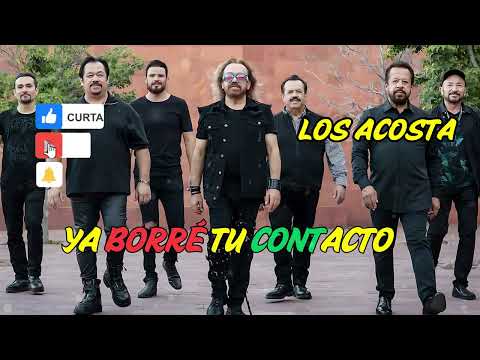
YA BORRÉ TU CONTACTO
LOS ACOSTA