
Lyrics & Translation
Discover the poignant farewell of Unheilig with 'Zeit zu gehen.' This song offers a profound reflection on endings and new beginnings, sharing a message of gratitude and acceptance. By exploring its lyrics and context, you can connect with themes of cherished memories and the courage to move forward, making it a special piece for understanding German farewell sentiments.
Key Vocabulary
| Vocabulary | Meanings |
|---|---|
|
Worte /ˈvɔʁtə/ A2 |
|
|
Träume /ˈtʁɔʏmə/ A2 |
|
|
Applaus /apˈplaʊs/ B1 |
|
|
Gipfel /ˈɡɪpfl/ B2 |
|
|
Leben /ˈleːbn̩/ A1 |
|
|
Erinnerung /eˈʁɪnəʁʊŋ/ B1 |
|
|
Stolz /ʃtɔlts/ B2 |
|
|
Jahre /ˈjaːʁə/ A1 |
|
|
Herzen /ˈhɛʁtsən/ B1 |
|
|
Fortuna /fɔʁˈtuːna/ B2 |
|
|
Stimmen /ˈʃtɪmən/ B1 |
|
|
Hände /ˈhɛndə/ A1 |
|
|
Abschied /ˈapʃiːt/ B2 |
|
|
Reise /ˈʁaɪ̯zə/ A2 |
|
|
Zeit /tsaɪ̯t/ A1 |
|
Do you remember what “Worte” or “Träume” means in "Zeit zu gehen"?
Hop into the app to practice now – quizzes, flashcards, and native-like pronunciation are waiting!
Key Grammar Structures
-
So viele Worte sind geschrieben
➔ Passive Voice (Present Perfect)
➔ The structure is "sind + geschrieben" (auxiliary verb 'sein' in present tense + past participle). It describes an action that was done to the subject (Worte - words).
-
Ihr habt uns mit Applaus getragen
➔ Present Perfect Tense
➔ The phrase "habt getragen" is in the present perfect tense, indicating an action completed at some point in the past. "Mit Applaus" means 'with applause'.
-
Doch nichts im Leben ist unendlich
➔ Subject-Verb Agreement with 'nichts'
➔ "Nichts" (nothing) is treated as singular, so the verb is in the singular form: "ist" (is).
-
Jede Erinnerung ist zu wertvoll, Um nur aus Stolz kein Ende zu sehen
➔ Infinitive Clause with 'um...zu'
➔ The structure "um...zu" introduces an infinitive clause expressing purpose. "Um nur aus Stolz kein Ende zu sehen" means 'in order to not see an end just out of pride'.
-
Auch wenn es weh tut
➔ Subjunctive Mood (Conditional Clause)
➔ "Auch wenn" introduces a concessive clause (even if). "Weh tut" is in subjunctive mood, indicating a hypothetical or unreal situation, or something contrary to fact (it might hurt, but...).
-
Wenn es am schönsten ist
➔ Superlative with 'am'
➔ "Am schönsten" is the superlative form of "schön" (beautiful). The preposition "am" is used to form the superlative for adjectives when they are predicative (i.e., when they come after a verb like "sein").
-
Kein Augenblick ist je verloren
➔ Negative Pronoun 'kein' with Nominative Case
➔ 'Kein' is a negative pronoun, declining like 'ein' (a/an). Here, it's in the nominative case because it's the subject of the sentence, modifying 'Augenblick'.
Album: Gipfelstürmer
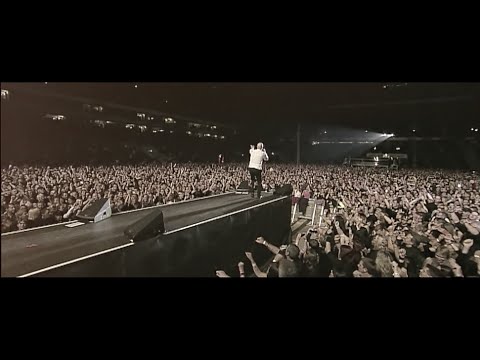
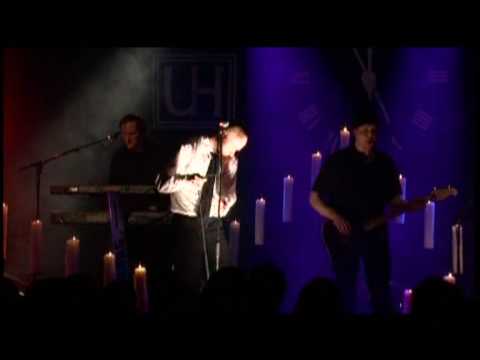
Same Singer


Related Songs

Tomboy
Destiny Rogers

Baby
Justin Bieber, Ludacris

Love Somebody
Aura

Back to my ways
Nanu

Dancing with the Devil
Nanu

Sad Girls
Bebe Rexha, David Guetta

My Love
Westlife

cry on my shoulder
super star

Dangerously
Charlie Puth

Cupid (Twin version)
FIFTY FIFTY

I Am A Gummy Bear (The Gummy Bear Song)
Gummibär

Ordinary
Alex Warren

Let It Go
Idina Menzel, NateWantsToBattle

Hips Don't Lie
Shakira, Wyclef Jean

Can't Help Myself
aespa

飛ぶ時
Vaundy

ポルターガイスト
なとり

Été avec toi
Adèle Castillon

Pépélé
Fally Ipupa, Guy2Bezbar

Dracula (JENNIE Remix)
Tame Impala, JENNIE