
Lyrics & Translation
Key Vocabulary
| Vocabulary | Meanings |
|---|---|
|
labios ˈla.βjos B1 |
|
|
besito beˈsi.to A2 |
|
|
cuerpo ˈkweɾ.po A2 |
|
|
golpito golˈpi.to B1 |
|
|
fortuna foɾˈtu.na B2 |
|
|
salud saˈluð A2 |
|
|
querita keˈɾi.ta B1 |
|
|
proteja pɾoˈte.xa B1 |
|
|
equivocó e.ki.βoˈko B2 |
|
|
bonita boˈni.ta A2 |
|
|
fiateo fjaˈte.o B2 |
|
|
perreo peˈɾe.o B1 |
|
|
sabio ˈsa.βjo B1 |
|
|
roto ˈro.to A2 |
|
|
fiestas ˈfjes.tas A2 |
|
|
ratidos raˈti.ðos B2 |
|
|
brujería bɾu.xeˈɾi.a B2 |
|
|
escada esˈka.ða B1 |
|
🚀 "labios", "besito" – from “AL GOLPITO” still a mystery?
Learn trendy vocab – vibe with music, get the meaning, and use it right away without sounding awkward!
Key Grammar Structures
-
Le pedí a Dios por tus labios para que me diera besito.
➔ Purpose clause with *para que* + subjunctive
➔ The conjunction *para que* introduces a purpose clause; the verb *diera* is in the subjunctive because the result is not guaranteed.
-
Aunque yo se tarde un poquito, es porque las cosas buenas siempre llegan al golpito.
➔ Concessive clause with *aunque* + indicative
➔ The word *aunque* introduces a concession; the verb *se tarde* stays in the indicative because the statement is presented as a fact.
-
Si un día estás con otro, eso va a durar poco.
➔ Conditional clause with *si* + present → future simple
➔ The conjunction *si* introduces a real condition; the present tense *estás* describes a possible situation, and *va a durar* uses the immediate future to show the result.
-
No le des gracias a Dios si a nosotros dos nos unió al destino.
➔ Negative imperative + conditional clause with *si*
➔ The verb phrase *No le des* is a negative command; it is followed by a *si* clause that states the condition under which the command applies.
-
Y aunque duelas, yo decido que el dolor se queda aquí conmigo.
➔ Concessive clause with *aunque* + subjunctive
➔ The conjunction *aunque* introduces a concessive idea; the verb *duelas* is in the subjunctive because the speaker doubts or wishes the pain to happen.
-
Gracias a Dios por tu cuerpo bailándome despacito.
➔ Gerund phrase as adverbial modifier
➔ The gerund *bailándome* describes how the body is moving; it functions like an adverb, indicating the manner of the gratitude.
-
Pégate un poquito, quiero más, quiero más.
➔ Imperative of pronominal verb *pegarse*
➔ The form *Pégate* is the affirmative imperative of the reflexive verb *pegarse* (to stick to), used here colloquially to mean “come closer”.
-
Me tienes pensando grosería.
➔ Verb + direct object pronoun + gerund (object complement)
➔ The verb *tienes* is followed by the direct‑object pronoun *me* and the gerund *pensando*; together they function as an object complement meaning “you make me think”.
Related Songs

Nadie Como Tú
Wisin & Yandel, Don Omar

Dile
Don Omar

Que Se Mueran
Romeo Santos

Me Gustas Tú
Manu Chao

Macarena

Ya no Somos ni Seremos
Christian Nodal

ALCOBA
Cris MJ, Clarent

Criminal
Natti Natasha, Ozuna

EXCESO DE PUTERÍA
l0rna, Kristina

TU SANCHO
Fuerza Regida

Pegao
Wisin & Yandel

GÁLDAR & AL GOLPITO
Quevedo, Tonny Tun Tun, Nueva Línea

La Guaracha (Oh Oh Oh)
Manuel Turizo, Martinwhite
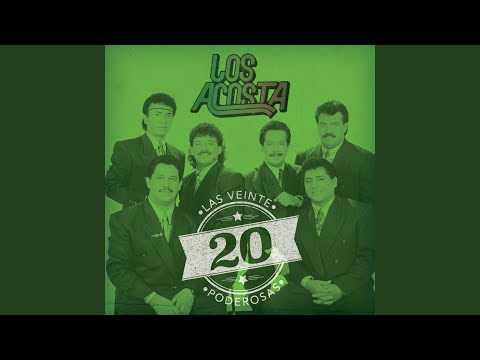
Una chica está llorando
Los Acosta
Contra el dragón
Los Acosta

En algún lugar
LOS ACOSTA
En Aquel Café
Los Acosta

En Algún Lugar
Los Acosta

Ya Borré Tu Contacto
Los Acosta

YA BORRÉ TU CONTACTO
LOS ACOSTA