
Lyrics & Translation
Learning Spanish through José José's "Me Llaman Tonto" offers insight into the emotional depth of Latin ballads. This song, with its evocative title, invites listeners to explore themes of feeling undervalued or foolish in the language, making it a poignant piece to connect with Spanish vocabulary and expression.
Key Vocabulary
| Vocabulary | Meanings |
|---|---|
|
tonto ˈtonto A2 |
|
|
llorar ʎoˈɾaɾ A2 |
|
|
verdad beɾˈðað B1 |
|
|
morir moˈɾiɾ B1 |
|
|
labios laˈβjos A2 |
|
|
ojos oˈxos A2 |
|
|
pasos ˈpasos A2 |
|
|
brazos ˈβɾasos A2 |
|
|
extrañar eks.tɾaˈɲaɾ B1 |
|
|
esperando es.peˈɾan.do A2 |
|
|
tiempo ˈtjem.po A2 |
|
|
nombran nomˈbɾan B1 |
|
|
buscan busˈkan B1 |
|
💡 Which new word in “Me Llaman Tonto” caught your eye?
📱 Open the app to check meanings, build sentences, and try them out in real convos!
Key Grammar Structures
-
Dicen que un tonto soy, a mi paso,
➔ Present tense of 'ser' (to be) used to express a characteristic.
➔ The verb 'soy' is the first person singular present tense of 'ser', used here to describe a permanent characteristic ('tonto').
-
Que por no verte a ti, he llorado,
➔ Present perfect of 'llorar' (to cry) to indicate a past action with present relevance.
➔ 'He llorado' shows an action that started in the past and has effects in the present, emphasizing the ongoing emotional impact.
-
Que pensarán de mi? Si saben la verdad
➔ Future tense implied by 'pensarán' (will think) and conditional 'si' (if) for hypothetical situations.
➔ 'Pensarán' is the future tense, and 'si' introduces a condition, expressing what might happen if the truth is known.
-
Mis labios te nombran!
➔ Present tense of 'nombrar' (to name) with indirect object pronoun 'te'.
➔ The verb 'nombran' is in the present tense, and 'te' is the indirect object pronoun, indicating the action is directed toward 'you'.
-
Y sigo esperando y el tiempo pasando.
➔ Present tense of 'seguir' (to continue) and 'pasar' (to pass) to describe ongoing actions.
➔ 'Sigo' and 'pasando' are both in the present tense, emphasizing the continuous nature of waiting and time passing.
Related Songs

Nadie Como Tú
Wisin & Yandel, Don Omar

Dile
Don Omar

Que Se Mueran
Romeo Santos

Me Gustas Tú
Manu Chao

Macarena

Ya no Somos ni Seremos
Christian Nodal

ALCOBA
Cris MJ, Clarent

Criminal
Natti Natasha, Ozuna

EXCESO DE PUTERÍA
l0rna, Kristina

TU SANCHO
Fuerza Regida

Pegao
Wisin & Yandel

GÁLDAR & AL GOLPITO
Quevedo, Tonny Tun Tun, Nueva Línea

La Guaracha (Oh Oh Oh)
Manuel Turizo, Martinwhite
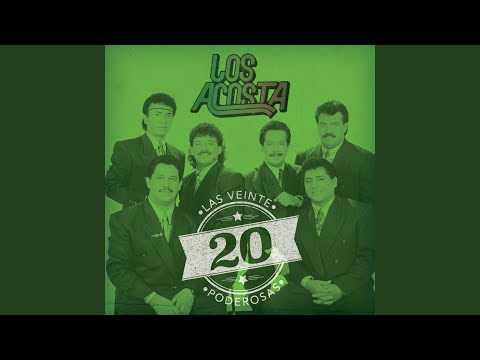
Una chica está llorando
Los Acosta
Contra el dragón
Los Acosta

En algún lugar
LOS ACOSTA
En Aquel Café
Los Acosta

En Algún Lugar
Los Acosta

Ya Borré Tu Contacto
Los Acosta

YA BORRÉ TU CONTACTO
LOS ACOSTA