
Lyrics & Translation
Dive into the passionate and expressive world of Música Mexicana with Herencia De Grandes' 'Ya Borracho.' The song offers a fantastic opportunity to learn Spanish vocabulary related to intense emotion, romance, and everyday romantic gestures, like *serenatas* (serenades). Its straightforward, narrative-driven lyrics and cultural theme of a grand, drunken love confession make it a compelling and memorable track for language learners.
Key Vocabulary
| Vocabulary | Meanings |
|---|---|
|
enamorar /enaˈmoɾar/ B2 |
|
|
borracho /boˈratʃo/ B1 |
|
|
obsesionado /obsesjoˈnaðo/ C1 |
|
|
alma /ˈalma/ B1 |
|
|
canción /kanˈθjon/ (Spain), /kanˈsjon/ (Latin America) A2 |
|
|
flor /floɾ/ A2 |
|
|
feliz /feˈlis/ A2 |
|
|
ventana /benˈtana/ A2 |
|
|
cariño /kaˈɾiɲo/ B1 |
|
|
pregunta /pɾeˈɣunta/ A2 |
|
|
mirar /miˈɾar/ A2 |
|
|
decidir /desiˈðiɾ/ B1 |
|
|
describir /deskɾiˈβiɾ/ B1 |
|
|
novio /ˈnoβjo/ A2 |
|
|
contento /konˈtento/ A2 |
|
|
emocionado /emosjoˈnaðo/ B2 |
|
What does “enamorar” mean in the song "Ya Borracho"?
Learn fast – go deep – and remember longer with interactive exercises in the app!
Key Grammar Structures
-
Me enamoré y creo que me fui de paso
➔ Preterite reflexive verb (me enamoré) and reflexive motion verb (me fui).
➔ The use of 'me' makes both verbs reflexive, showing the subject is affected by their own action.
-
Hoy me declaro un loco obsesionado
➔ Reflexive verb in present tense (me declaro) plus object complement (un loco obsesionado).
➔ ‘Me declaro’ shows self-identification or self-description; it works like 'I declare myself as...'.
-
Cuando te vi sentí algo que ya no había aquí
➔ Use of preterite tense in sequence (vi, sentí) and relative clause introduced by ‘que’.
➔ The verbs 'vi' and 'sentí' express completed actions. ‘Que ya no había aquí’ modifies ‘algo’.
-
Y me decidí por ti
➔ Reflexive verb ‘decidirse por’ meaning to choose something emotionally.
➔ The reflexive form adds emotional involvement — 'me decidí por ti' means 'I made up my mind for you'.
-
Y ya borracho me parqueo por tu ventana
➔ Colloquial present usage (me parqueo) indicating habitual or narrative immediacy.
➔ ‘Me parqueo’ uses a present reflexive form meaning ‘I park myself’, reflecting casual spoken usage.
-
Para llevarte las canciones que te encantan
➔ Use of infinitive purpose clause (para + infinitive).
➔ ‘Para llevarte’ means ‘in order to bring you’, explaining purpose.
-
Pa enamorarte, las flores no son tan caras
➔ Contraction of ‘para’ → ‘pa’ (informal speech) and infinitive purpose with direct object.
➔ ‘Pa enamorarte’ is informal for ‘para enamorarte’ meaning ‘to make you fall in love’.
-
Espero que quieras estar aquí
➔ Use of present subjunctive (quieras) after expression of hope.
➔ ‘Que quieras’ is subordinate to ‘espero’; subjunctive shows uncertainty or emotional desire.
Related Songs

Nadie Como Tú
Wisin & Yandel, Don Omar

Dile
Don Omar

Que Se Mueran
Romeo Santos

Me Gustas Tú
Manu Chao

Macarena

Ya no Somos ni Seremos
Christian Nodal

ALCOBA
Cris MJ, Clarent

Criminal
Natti Natasha, Ozuna

EXCESO DE PUTERÍA
l0rna, Kristina
TU SANCHO
Fuerza Regida

Pegao
Wisin & Yandel

GÁLDAR & AL GOLPITO
Quevedo, Tonny Tun Tun, Nueva Línea

La Guaracha (Oh Oh Oh)
Manuel Turizo, Martinwhite
Una chica está llorando
Los Acosta
Contra el dragón
Los Acosta

En algún lugar
LOS ACOSTA
En Aquel Café
Los Acosta

En Algún Lugar
Los Acosta

Ya Borré Tu Contacto
Los Acosta
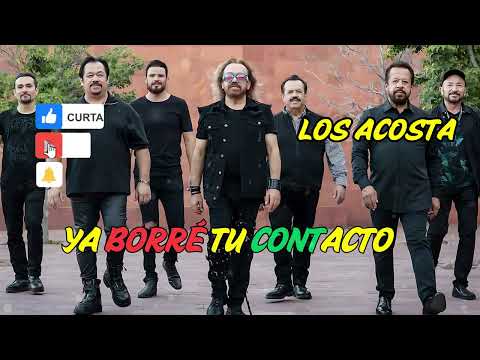
YA BORRÉ TU CONTACTO
LOS ACOSTA