
Ya – Bilingual Lyrics Spanish/English
Lyrics & Translation
To learn Spanish through music, "Ya" offers a blend of genres and a clear, emphatic message. You can learn common expressions of finality, relationship vocabulary, and the powerful use of the single-syllable word 'ya' to mean 'enough' or 'it's over,' all within a vibrant, danceable rhythm.
Key Vocabulary
| Vocabulary | Meanings |
|---|---|
|
decir /deˈsiɾ/ A2 |
|
|
querer /keˈɾeɾ/ A1 |
|
|
llorar /ʝoˈɾaɾ/ B1 |
|
|
vida /ˈbiða/ A2 |
|
|
poder /poˈðeɾ/ A2 |
|
|
nada /ˈnaða/ A2 |
|
|
pasado /paˈsaðo/ B2 |
|
|
amor /aˈmoɾ/ B1 |
|
|
forma /ˈfoɾma/ B1 |
|
|
ser /seɾ/ A1 |
|
|
tiempo /ˈtjempo/ A2 |
|
|
perder /peɾˈdeɾ/ B1 |
|
|
juntos /ˈxuntos/ A2 |
|
|
cambiar /kamˈbjaɾ/ B1 |
|
|
entender /entenˈdeɾ/ A2 |
|
Do you remember what “decir” or “querer” means in "Ya"?
Hop into the app to practice now – quizzes, flashcards, and native-like pronunciation are waiting!
Key Grammar Structures
-
Ya, he dicho ya, ya no te quiero
➔ Present Perfect (he dicho)
➔ "He dicho" expresses an action completed recently with effect in the present.
-
Vete de mi vida
➔ Imperative form (vete)
➔ "Vete" is the informal command form of "irse" meaning 'go away'.
-
Ya no quiero nada
➔ Double negation (no + nada)
➔ "No" and "nada" together mean 'nothing at all', strengthening the negation.
-
Que es lo que tú quieres
➔ Question with relative pronoun (qué es lo que)
➔ "Qué es lo que" emphasizes 'what exactly' you want, common for emphasis in speech.
-
Todo ha terminado
➔ Present Perfect (ha terminado)
➔ "Ha terminado" stresses that 'it has ended' — present relevance of a completed action.
-
He dicho que ya ya ya
➔ Reported speech (he dicho que...)
➔ "He dicho que" introduces reported or stated speech — saying what someone said.
-
Desde hace mucho tiempo yo vengo observando
➔ Present continuous with 'venir + gerundio'
➔ "Vengo observando" means 'I have been observing' — an action continuing over time.
-
Que tú estás cambiando tu forma de ser
➔ Present continuous (estás cambiando)
➔ "Estás cambiando" indicates a change happening currently, not completed yet.
-
Ya no tiene caso que vivamos juntos
➔ Subjunctive mood (vivamos)
➔ "Vivamos" is in the subjunctive because it follows an expression of opinion or value judgment.
-
No pierdas el tiempo
➔ Negative imperative (no + subjunctive form)
➔ "No pierdas" is a negative command using subjunctive form — 'Don’t waste time.'
Related Songs
Nadie Como Tú
Wisin & Yandel, Don Omar

Dile
Don Omar

Que Se Mueran
Romeo Santos

Me Gustas Tú
Manu Chao

Macarena

Ya no Somos ni Seremos
Christian Nodal

ALCOBA
Cris MJ, Clarent

Criminal
Natti Natasha, Ozuna

EXCESO DE PUTERÍA
l0rna, Kristina
TU SANCHO
Fuerza Regida

Pegao
Wisin & Yandel

GÁLDAR & AL GOLPITO
Quevedo, Tonny Tun Tun, Nueva Línea

La Guaracha (Oh Oh Oh)
Manuel Turizo, Martinwhite

Una chica está llorando
Los Acosta
Contra el dragón
Los Acosta

En algún lugar
LOS ACOSTA
En Aquel Café
Los Acosta

En Algún Lugar
Los Acosta

Ya Borré Tu Contacto
Los Acosta
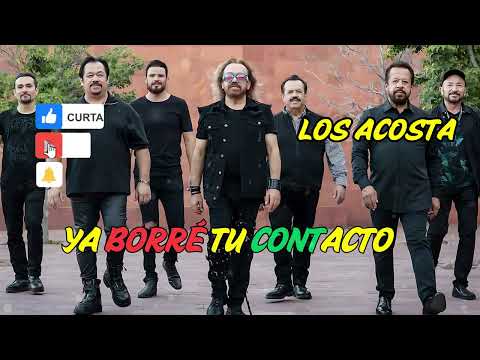
YA BORRÉ TU CONTACTO
LOS ACOSTA