
Lyrics & Translation
Embark on a captivating journey into the raw emotion of Ivan Cornejo's "Interlude." This brief yet impactful song offers a perfect entry point to understanding the lyrical beauty and heartfelt expression of Regional Mexican music. Its simple, poignant Spanish lyrics convey universal themes of heartbreak and loss, making it an excellent piece to connect with the language through deep feeling and powerful storytelling.
Key Vocabulary
| Vocabulary | Meanings |
|---|---|
|
cerré seˈre A2 |
|
|
ojos ˈoxos A1 |
|
|
fuiste ˈfuiste B1 |
|
|
pasó paˈso A2 |
|
|
mija ˈmiha B2 |
|
|
nos nos A1 |
|
🚀 "cerré", "ojos" – from “Interlude” still a mystery?
Learn trendy vocab – vibe with music, get the meaning, and use it right away without sounding awkward!
Key Grammar Structures
-
Mija, ¿qué nos pasó?
➔ Interrogative sentence with inversion
➔ The inversion of the subject and verb (¿qué nos pasó?) is typical in Spanish questions for emphasis.
-
Solo cerré mis ojos
➔ Past tense with reflexive pronoun
➔ The verb 'cerré' is in the preterite past tense, and 'mis ojos' is a reflexive possessive pronoun.
-
y te me fuiste
➔ Pronominal verb with indirect object pronoun
➔ 'Te me' are indirect object pronouns, and 'fuiste' is the preterite form of 'irse' (to leave).
Album: MIRADA

Same Singer

Related Songs

Nadie Como Tú
Wisin & Yandel, Don Omar

Dile
Don Omar

Que Se Mueran
Romeo Santos

Me Gustas Tú
Manu Chao

Macarena

Ya no Somos ni Seremos
Christian Nodal

ALCOBA
Cris MJ, Clarent

Criminal
Natti Natasha, Ozuna

EXCESO DE PUTERÍA
l0rna, Kristina
TU SANCHO
Fuerza Regida

Pegao
Wisin & Yandel

GÁLDAR & AL GOLPITO
Quevedo, Tonny Tun Tun, Nueva Línea

La Guaracha (Oh Oh Oh)
Manuel Turizo, Martinwhite
Una chica está llorando
Los Acosta
Contra el dragón
Los Acosta

En algún lugar
LOS ACOSTA
En Aquel Café
Los Acosta

En Algún Lugar
Los Acosta

Ya Borré Tu Contacto
Los Acosta
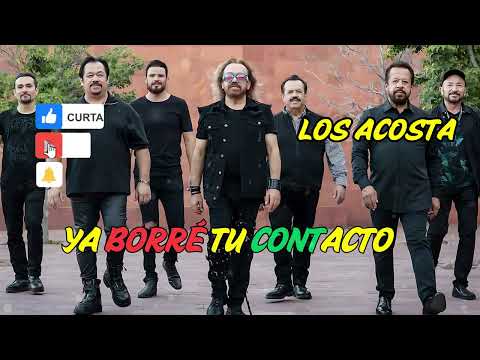
YA BORRÉ TU CONTACTO
LOS ACOSTA