
Lyrics & Translation
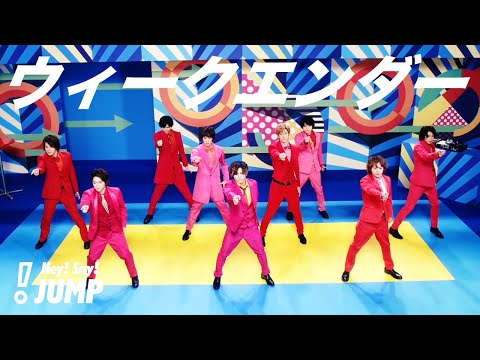
Dive into the energetic world of J-pop with Hey! Say! JUMP's “Weekender,” a catchy tune that's perfect for learning fun, everyday Japanese phrases about weekends and romance. Its upbeat tempo and disco influences make it an enjoyable way to explore Japanese pop culture and improve your language skills .
Key Vocabulary
| Vocabulary | Meanings |
|---|---|
|
土曜 /どよう/ A1 |
|
|
ハイビート /hai bīto/ B1 |
|
|
胸騒ぎ /むねさわぎ/ B1 |
|
|
ノンフィクション /nonfikushon/ B2 |
|
|
ファンタジー /fantajī/ B1 |
|
|
アクター /akutā/ B1 |
|
|
オンリールール /onrī rūru/ B2 |
|
|
ミステリー /misuterī/ B1 |
|
|
ファンキータイム /fankī taimu/ B2 |
|
|
宇宙 /uchū/ A1 |
|
|
暑い /atsui/ A1 |
|
|
ウィークエンド /wīkuendō/ A1 |
|
|
クイーン /kuīn/ B1 |
|
|
ナイト /naito/ B1 |
|
|
ラビリンス /rabirinsu/ B2 |
|
|
クエスチョン /kuesuchon/ B2 |
|
|
ロマン /roman/ B1 |
|
|
タイム /taimu/ A1 |
|
💡 Which new word in “ウィークエンダー” caught your eye?
📱 Open the app to check meanings, build sentences, and try them out in real convos!
Key Grammar Structures
-
土曜日の夜は ハイビート胸騒ぎ
➔ Noun + は (topic marker)
➔ The phrase uses the topic marker ''は'' to indicate that ''土曜日の夜'' (Saturday night) is the topic of discussion.
-
I miss you! ウィークエンダー
➔ Present tense for expressing feelings
➔ The phrase ''I miss you!'' uses the present tense to express a current feeling of longing.
-
それがオンリールール
➔ Demonstrative pronoun + が (subject marker)
➔ The phrase uses the demonstrative pronoun ''それ'' (that) followed by the subject marker ''が'' to emphasize the rule being referred to.
-
恋は、キラリ ミステリー
➔ Noun + は (topic marker) + noun
➔ The phrase uses the topic marker ''は'' to indicate that ''恋'' (love) is the topic, followed by a description of it as ''キラリ ミステリー'' (sparkling mystery).
-
今夜 僕とのファンキータイム
➔ Time expression + noun + の (possessive marker)
➔ The phrase uses ''今夜'' (tonight) followed by the possessive marker ''の'' to indicate that the ''ファンキータイム'' (funky time) belongs to the speaker.
-
So 解けない愛から始まる ∞ミステリー
➔ Verb + から (indicating reason)
➔ The phrase uses ''始まる'' (to begin) with ''から'' to indicate that the ''∞ミステリー'' (infinite mystery) starts from the ''解けない愛'' (unresolvable love).
-
最高に魅力的な謎を解く
➔ Adjective + な (adjectival noun)
➔ The phrase uses the adjective ''魅力的'' (charming) with ''な'' to modify the noun ''謎'' (mystery), indicating that it is a charming mystery.
Same Singer

SUPER CRUISIN'
Hey! Say! JUMP

encore
Hey! Say! JUMP

Ready to Jump
Hey! Say! JUMP
獣と薔薇
Hey! Say! JUMP

Dear My Lover
Hey! Say! JUMP
ウィークエンダー
Hey! Say! JUMP

Sing-along
Hey! Say! JUMP

Love Your Life
Hey! Say! JUMP

群青ランナウェイ
Hey! Say! JUMP
Related Songs

Rhythm Divine
Enrique Iglesias

Best Friend
Sofia Camara

Before The Light Goes
Melody Blush

Babydoll
Dominic Fike

Nevada
Vicetone, Cozi Zuehlsdorff

Nevada
Vicetone, Cozi Zuehlsdorff

Kings & Queens
Ava Max

Fake Happy
Paramore

Hard To Love
ROSÉ

¿Cómo Así?
Kali Uchis

Diosa
Kali Uchis

Te Mata
Kali Uchis

Dame Beso // Muévete
Kali Uchis

La Chica de Humo
Emmanuel
Just The Way You Are
Milky

Stay
Zedd, Alessia Cara

Perfect
Ed Sheeran

Girls Like You
Maroon 5, Cardi B

Shape of You
Ed Sheeran

Nothing's Gonna Change My Love For You
Isaac Hong, Park Jeong Woo