
Lyrics & Translation
Dive into the world of Japanese language and culture with DISH//'s uplifting track, 'Shiwakucha na Kumo wo Daite.' This song, with its inspiring lyrics about overcoming challenges and embracing a positive future, offers a perfect entry point into everyday Japanese expressions and nuanced emotional vocabulary. Its engaging medium-rock style and clear vocals make it accessible for language learners, while the lyrical depth provides insight into Japanese perspectives on personal growth and happiness.
Key Vocabulary
| Vocabulary | Meanings |
|---|---|
|
風 /kaze/ A2 |
|
|
泣く /naku/ A2 |
|
|
大人 /otona/ A2 |
|
|
恋 /koi/ B1 |
|
|
愛 /ai/ B1 |
|
|
幸せ /shiawase/ B1 |
|
|
髪 /kami/ A2 |
|
|
雲 /kumo/ A2 |
|
|
抱く /daku/ B1 |
|
|
流れる /nagareru/ B1 |
|
|
乗る /noru/ A2 |
|
|
絡む /karamu/ B2 |
|
|
夢 /yume/ B1 |
|
|
太陽 /taiyō/ A2 |
|
|
不意 /fui/ B2 |
|
|
余裕 /yoyū/ B2 |
|
🚀 "風", "泣く" – from “しわくちゃな雲を抱いて” still a mystery?
Learn trendy vocab – vibe with music, get the meaning, and use it right away without sounding awkward!
Key Grammar Structures
-
少し泣けてきたけど
➔ The te-form + て (te) form of '泣く' (to cry) used to connect actions, with a concessive 'but'.
➔ The use of て-form of '泣く' (to cry) to connect clauses, with けど adding a concessive nuance equivalent to 'but' or 'although'.
-
流れてゆく
➔ The verb '流れる' (to flow) in the te- and auxiliary 'ゆく' to indicate movement away from the speaker or ongoing process.
➔ The combination of the te-form of '流れる' and 'ゆく' indicates continuous or forward-moving action, often conveying a poetic or metaphorical sense of passage or progression.
-
願ったりかなったり
➔ The expression '願ったりかなったり' (negai tari kanattari) is an idiomatic phrase meaning 'just what I wished for' or 'perfectly fine'.
➔ An idiomatic expression indicating satisfaction or that something is exactly as desired, emphasizing contentment or perfect fit.
-
幸せにならなくちゃ
➔ The phrase '〜なくちゃ' is colloquial contraction of 'なくては', meaning 'must' or 'have to' do something.
➔ A colloquial contraction of 'なくては', used to express obligation or necessity, similar to 'must' or 'have to' do something.
-
しわくちゃな雲を抱いて
➔ The noun phrase 'しわくちゃな雲' (wrinkled clouds) with the を particle indicates the direct object of '抱いて' (to embrace).
➔ The noun phrase with な modifies '雲' (cloud) to describe it as wrinkled, and を marks it as the direct object of the verb '抱く' (to hold, embrace).
Album: TRIANGLE
Same Singer

朝、月面も笑っている
DISH//

いつだってHIGH!
DISH//

HAPPY
DISH//

万々歳
DISH//

Replay
DISH//

しわくちゃな雲を抱いて
DISH//

Shout it out
DISH//
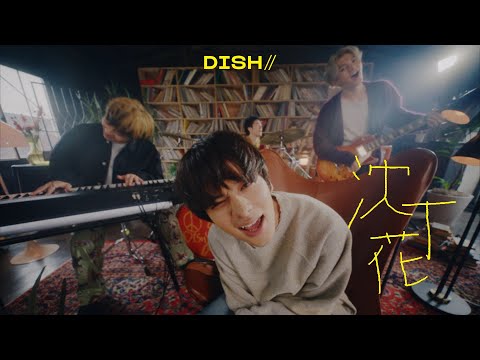
沈丁花
DISH//

ありのまんまが愛しい君へ
DISH//

僕らが強く
DISH//
Related Songs

My Skin's On Fire
Loving Caliber

Don't You Wanna Stay
Loving Caliber

Those Eyes
New West

We Don't Talk Anymore
Charlie Puth, Selena Gomez

Monster
Shawn Mendes, Justin Bieber

Never Be the Same
Camila Cabello

The 30th
Billie Eilish

Ordinary
Alex Warren

Girls Wanna Have Fun
Josh Fawaz

Gimme Dat Love
(G)I-DLE

花咲く道
ME:I

未完成婚姻論
超学生, マサ
しおざきわんだーらんど
M!LK, 塩﨑太智

des fleurs
Tove Lo, Stromae
WOKE UP IN TOKYO
BABYMONSTER

No Promises
Shayne Ward

No promises
Shayne Ward

DREAMERS
Jungkook, Fahad Al Kubaisi

Em Mới Là Người Yêu Anh
MIN

Attention
Charlie Puth