
Lyrics & Translation
Learning Japanese can be an exciting journey, and what better way to start than with the energetic and motivational song “Move It!” by Dream & E-girls. The song’s repetitive and encouraging phrases like “Go Dream On!” and “Go E-girls!” make it easy to sing along and pick up positive vocabulary. Its high-energy beat and powerful dance performance make it a special and fun song to engage with while learning the language.
Key Vocabulary
| Vocabulary | Meanings |
|---|---|
|
move /muːv/ A2 |
|
|
dream /driːm/ B1 |
|
|
feel /fiːl/ A2 |
|
|
heart /hɑːrt/ A2 |
|
|
stage /steɪdʒ/ A2 |
|
|
light /laɪt/ A2 |
|
|
shine /ʃaɪn/ B2 |
|
|
believe /bɪˈliːv/ B1 |
|
|
hope /hoʊp/ B1 |
|
|
reach /riːtʃ/ B1 |
|
|
power /ˈpaʊər/ B2 |
|
|
bright /braɪt/ B2 |
|
|
own /oʊn/ B1 |
|
|
stand /stænd/ B1 |
|
|
pass /pæs/ B2 |
|
Do you remember what “move” or “dream” means in "Move It!"?
Hop into the app to practice now – quizzes, flashcards, and native-like pronunciation are waiting!
Key Grammar Structures
-
Move it 感じるままに
➔ The phrase "ままに" expresses doing something "as it is" or "according to" a certain state or condition.
➔ "ままに" means "as it is" or "according to" a certain condition, emphasizing doing something in the current state.
-
絶対止まらない
➔ The phrase "絶対止まらない" combines "絶対" (absolutely) with the negative "止まらない" (will not stop) to express unwavering determination.
➔ "絶対" means "absolutely" or "definitely," emphasizing certainty, while "止まらない" means "will not stop," together indicating strong resolve.
-
We are Dream & E-girls
➔ The sentence "We are Dream & E-girls" uses the simple present tense "are" to express identity or belonging.
➔ "are" is the present tense of "be," used here to define or identify the subject "We" as belonging to Dream & E-girls.
-
夢を掴むまで
➔ The phrase "夢を掴むまで" uses "まで" to indicate "until" or "up to" a certain point, expressing perseverance until achieving a dream.
➔ "まで" means "until" or "up to" a point in time or achievement, emphasizing persistence.
-
限界の先まで
➔ The phrase "限界の先まで" uses "の" as a possessive or descriptive particle, and "まで" to mean "up to" beyond the limit, indicating pushing past boundaries.
➔ "の" is a possessive or descriptive particle linking nouns, and "まで" means "up to" or "beyond" a certain limit, indicating going past boundaries.
-
新しい時代切り開いていくの
➔ The phrase "切り開いていく" uses the te-form "て" plus "いく" to express "to open up" or "to pioneer" and indicate continued action toward the future.
➔ The te-form "て" combined with "いく" indicates continuing action or moving forward, often towards a goal or future.
Album: E.G. TIME
Same Singer

Pain, pain
E-girls
あいしてると言ってよかった
E-girls

北風と太陽
E-girls

Love ☆ Queen
E-girls
All Day Long Lady
E-girls
Go! Go! Let's Go!
E-girls

Pink Champagne
E-girls

E.G. summer RIDER
E-girls

STRAWBERRY サディスティック
E-girls

DANCE WITH ME NOW!
E-girls
Merry × Merry Xmas★
E-girls

Dance Dance Dance
E-girls

Anniversary!!
E-girls

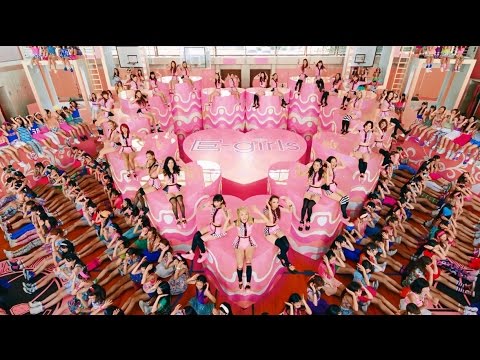
Move It!
Dream, E-girls
Highschool ♡ love
E-girls

おどるポンポコリン
E-girls
E.G. Anthem -WE ARE VENUS-
E-girls

RYDEEN
E-girls

ごめんなさいのKissing You
E-girls

CANDY SMILE
e-girls
Related Songs

Rhythm Divine
Enrique Iglesias

Best Friend
Sofia Camara

Before The Light Goes
Melody Blush

Babydoll
Dominic Fike

Nevada
Vicetone, Cozi Zuehlsdorff

Nevada
Vicetone, Cozi Zuehlsdorff

Kings & Queens
Ava Max

Fake Happy
Paramore

Hard To Love
ROSÉ
¿Cómo Así?
Kali Uchis

Diosa
Kali Uchis

Te Mata
Kali Uchis

Dame Beso // Muévete
Kali Uchis

La Chica de Humo
Emmanuel
Just The Way You Are
Milky

Stay
Zedd, Alessia Cara

Perfect
Ed Sheeran

Girls Like You
Maroon 5, Cardi B

Shape of You
Ed Sheeran

Nothing's Gonna Change My Love For You
Isaac Hong, Park Jeong Woo