
Lyrics & Translation
Dive into the rich emotional landscape of Wanuka's 'Zecchou Sanka' (絶頂讃歌), a Latin-infused rock track that explores themes of love, desire, and solitude. Its evocative lyrics and unique blend of Japanese and Western musical elements offer a captivating entry point for those interested in understanding the nuances of the Japanese language and modern J-Pop. This song is special for its bold exploration of complex human relationships set against a dynamic and experimental soundscape.
Key Vocabulary
| Vocabulary | Meanings |
|---|---|
|
香る /kaoru/ B1 |
|
|
心 /kokoro/ A2 |
|
|
欲望 /yokubou/ B2 |
|
|
愛 /ai/ A1 |
|
|
涙 /namida/ A2 |
|
|
動く /ugoku/ B1 |
|
|
果てる /hateru/ B2 |
|
|
繁栄 /han'ei/ C1 |
|
|
欲 /yoku/ B2 |
|
|
原因 /gen'in/ B1 |
|
|
三度 /sando/ A2 |
|
|
至る /itaru/ B2 |
|
|
吐息 /toiki/ B2 |
|
|
恐怖 /kyoubou/ B2 |
|
🚀 "香る", "心" – from “絶頂讃歌” still a mystery?
Learn trendy vocab – vibe with music, get the meaning, and use it right away without sounding awkward!
Key Grammar Structures
-
ほとばしく香る君のその髪が
➔ The use of the の particle to connect nouns indicating possession or characteristic.
➔ 'の' connects the noun '君' and the noun phrase 'その髪' to show possession or description.
-
僕の心を踊らせたんです
➔ The causative form '踊らせた' indicating 'caused to dance' implying that something makes the subject feel or do something.
➔ '踊らせた' is the causative form of '踊る' (to dance), meaning 'to make dance' or 'caused to dance'.
-
(Hey, hey, hey!)
➔ Use of an interjection for emphasis, emotion, or catching attention.
➔ Interjections like '(Hey, hey, hey!)' are used to add emotional emphasis or draw attention in the song.
-
この翼に輪を付けるかは僕ら次第ですから
➔ The conditional phrase 'は...ですから' used to emphasize that the decision depends on 'us' or 'we'.
➔ 'は...ですから' indicates a reason or condition, here emphasizing that the decision to add a ring to the wings depends on 'us'.
-
零れる涙が飽和して
➔ The verb '飽和して' in the te-form indicates a continuous or resultant state, 'saturating' or 'being saturated'.
➔ '飽和して' is the te-form of '飽和する', used to describe the ongoing or resulting state of the tears being saturated.
-
それでも君ならいいんだって
➔ 'それでも' is a conjunction meaning 'nevertheless' or 'even so'; 'なら' expresses a conditional 'if'.
➔ 'それでも' introduces a concessive idea, while 'なら' indicates a conditional statement, together expressing 'even so, if you are...'.
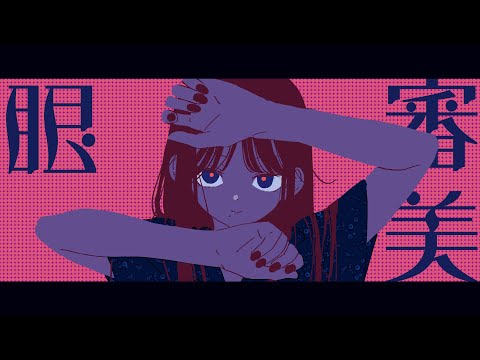
Album: 審美眼

Same Singer

Related Songs

My Skin's On Fire
Loving Caliber

Don't You Wanna Stay
Loving Caliber

Those Eyes
New West

We Don't Talk Anymore
Charlie Puth, Selena Gomez

Monster
Shawn Mendes, Justin Bieber

Never Be the Same
Camila Cabello

The 30th
Billie Eilish

Ordinary
Alex Warren

Girls Wanna Have Fun
Josh Fawaz

Gimme Dat Love
(G)I-DLE
花咲く道
ME:I
未完成婚姻論
超学生, マサ
しおざきわんだーらんど
M!LK, 塩﨑太智

des fleurs
Tove Lo, Stromae
WOKE UP IN TOKYO
BABYMONSTER

No Promises
Shayne Ward

No promises
Shayne Ward
DREAMERS
Jungkook, Fahad Al Kubaisi

Em Mới Là Người Yêu Anh
MIN

Attention
Charlie Puth