
Letras y Traducción
Vocabulario clave
| Vocabulario | Significados |
|---|---|
|
change /tʃeɪndʒ/ B1 |
|
|
laugh /læf/ A2 |
|
|
hurt /hɜːrt/ A2 |
|
|
slave /sleɪv/ B2 |
|
|
buried /ˈberid/ B1 |
|
|
grave /ɡreɪv/ B1 |
|
|
treat /triːt/ A2 |
|
|
night /naɪt/ A1 |
|
|
forgive /fərˈɡɪv/ B1 |
|
|
sweet /swiːt/ A1 |
|
|
lovin' /ˈlʌvɪn/ A2 |
|
|
home /hoʊm/ A1 |
|
|
left /left/ A1 |
|
|
always /ˈɔːlweɪz/ A2 |
|
|
tried /traɪd/ A2 |
|
|
stayed /steɪd/ A2 |
|
💡 ¿Qué palabra nueva de "Bring It On Home to Me" te causa más curiosidad?
📱 Entra en la App para ver su significado, hacer frases y usarla en conversaciones!
Estructuras gramaticales clave
-
If you ever change your mind about leavin' me behind
➔ Oración condicional real/primera condición (presente simple en la oración si).
➔ La palabra "If" introduce una oración condicional; el verbo en la cláusula 'If' está en presente simple para hablar de un futuro posible.
-
Bring it to me
➔ Modo imperativo: mandato/petición sin sujeto explícito.
➔ "Bring" está en la forma base utilizada en el imperativo para dar una orden.
-
I know I laughed when you left
➔ Pasado simple con cláusula de tiempo: la acción ocurrió en el pasado; 'when' introduce la cláusula temporal.
➔ "when" introduce una cláusula de tiempo, indicando cuándo ocurrió la acción.
-
But now I know I only hurt myself
➔ Contraste con adverbio 'only': énfasis en la limitación de la acción.
➔ "only" marca la limitación de lo ocurrido; el hablante contrasta el ahora con el pasado.
-
You know I'll always be your slave
➔ Futuro with 'I'll' expresa una acción futura.
➔ "I'll" es la contracción de "I will," usada para expresar una acción futura.
-
'Til I'm buried
➔ Cláusula de tiempo con 'Til' (informal de 'until').
➔ "Til" significa "until"; establece un límite de tiempo hasta un punto futuro.
-
I tried to treat you right
➔ Pasado simple con 'to' infinitivo: 'tried to' + infinitivo sin 'to' (colloquial).
➔ "to" marca el infinitivo tras 'tried'; el hablante intentó tratarte bien.
-
Stayed out all night
➔ Verbo frasal: stay out + modificador adverbial; 'out' funciona como adverbio.
➔ "out" es la partícula que forma el phrasal verb 'stay out', meaning estar fuera de casa.
-
Come on!
➔ Frase imperativa/exclamativa que anima a actuar.
➔ "Come" es un verbo en imperativo que urge a alguien a empezar o continuar una acción.
Mismo cantante

Everything I Do (I Do It for You)
Bryan Adams

Cuts Like A Knife
Bryan Adams

Heat Of The Night
Bryan Adams

Je défendrai ma vie
Bryan Adams

Will We Ever Be Friends Again
Bryan Adams

I Can't Go Back
Samantha Barks, Bryan Adams
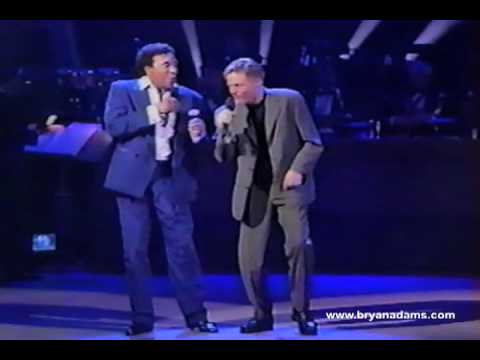
Bring It On Home to Me
Bryan Adams, Sam Moore
Canciones relacionadas

My Skin's On Fire
Loving Caliber

Don't You Wanna Stay
Loving Caliber

Those Eyes
New West

We Don't Talk Anymore
Charlie Puth, Selena Gomez

Monster
Shawn Mendes, Justin Bieber

Never Be the Same
Camila Cabello

The 30th
Billie Eilish

Ordinary
Alex Warren

Girls Wanna Have Fun
Josh Fawaz

Gimme Dat Love
(G)I-DLE

花咲く道
ME:I

未完成婚姻論
超学生, マサ

しおざきわんだーらんど
M!LK, 塩﨑太智

des fleurs
Tove Lo, Stromae

WOKE UP IN TOKYO
BABYMONSTER
No Promises
Shayne Ward

No promises
Shayne Ward

DREAMERS
Jungkook, Fahad Al Kubaisi

Em Mới Là Người Yêu Anh
MIN
Attention
Charlie Puth