
Katharina – Paroles bilingues German/Français
Paroles et Traduction
Vocabulaire clé
| Vocabulaire | Significations |
|---|---|
|
wunderbar ˈvʊndɐbaːɐ̯ A1 |
|
|
demütig ˈdeːmʏtɪç C1 |
|
|
Ruhe ˈruːə A2 |
|
|
glauben ˈɡlaʊ̯bn̩ A2 |
|
|
Strand ʃtʁant A1 |
|
|
Leben ˈleːbn̩ A1 |
|
|
Zweifel ˈt͡svaɪ̯fl̩ B2 |
|
|
Wut vuːt B1 |
|
|
genug ɡəˈnuːk A1 |
|
|
wissen ˈvɪsn̩ A1 |
|
|
weitergehen ˈvaɪ̯tɐˌɡeːən B1 |
|
“wunderbar, demütig, Ruhe” – tu les connais tous ?
⚡ Découvre les exercices de vocabulaire dans l’app juste après avoir écouté "Katharina" !
Structures grammaticales clés
-
Und manchmal denk ich, dass du dich nicht so gut finden kannst wie ich dich.
➔ Proposition subordonnée avec 'dass' (conjonction)
➔ La conjonction "dass" introduit une proposition subordonnée, rejetant le verbe conjugué "kannst" à la fin.
-
Du glaubst nicht mehr daran, dass du alles haben kannst.
➔ Adverbe pronominal 'daran' (da + an)
➔ L'adverbe pronominal "daran" renvoie à un objet (glauben an + Acc.) qui sera expliqué dans la proposition "dass" suivante.
-
Du siehst deine Freunde irgendwo am Strand, die das Leben leben.
➔ Proposition relative (Relativsatz)
➔ Le pronom relatif "die" se rapporte à "Freunde" et introduit une proposition descriptive, rejetant le verbe "leben" à la fin.
-
Und du denkst immer du wärst nicht genug.
➔ Konjunktiv II (subjonctif II) pour exprimer des pensées/doutes rapportés
➔ La forme "wärst" est le Konjunktiv II de "sein", utilisé ici pour exprimer un état d'esprit subjectif ou une supposition.
-
Dann will ich wissen, wie's weitergeht.
➔ Proposition subordonnée interrogative (interrogation indirecte)
➔ La structure "wie's weitergeht" sert d'objet au verbe "wissen", formant une interrogation indirecte.
-
Und deine Wut, deine Wut ist schon okay.
➔ Particule modale 'schon'
➔ Ici, "schon" sert de particule modale pour ajouter une nuance de réassurance ou d'acceptation.
-
So viele Zweifel, die brauchst du nicht.
➔ Topicalisation (Antéposition de l'objet direct)
➔ "So viele Zweifel" est placé au début pour insister, "die" servant de pronom de rappel.
-
Du glaubst nicht mehr daran.
➔ Négation avec 'nicht mehr' (ne ... plus)
➔ "Nicht mehr" est utilisé pour décrire la fin d'un état ou d'une croyance.
Album: Es ist Abend und wir sitzen bei mir

Erdbeerkuchen
AnnenMayKantereit
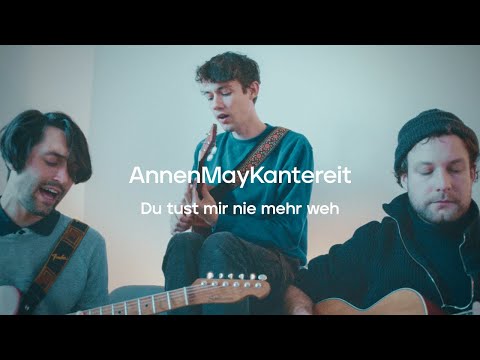
Du tust mir nie mehr weh
AnnenMayKantereit

3 Tage am Meer
AnnenMayKantereit

Es ist Abend
AnnenMayKantereit

Katharina
AnnenMayKantereit

Orangenlied
AnnenMayKantereit
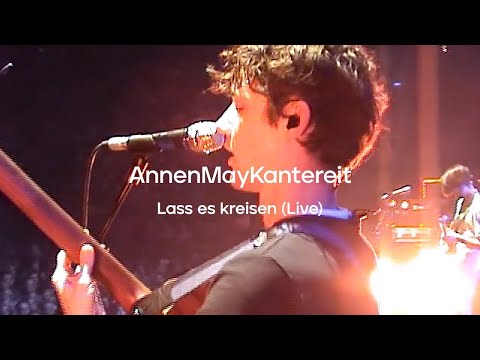
Lass es kreisen
AnnenMayKantereit
Même chanteur/chanteuse

Freitagabend
AnnenMayKantereit
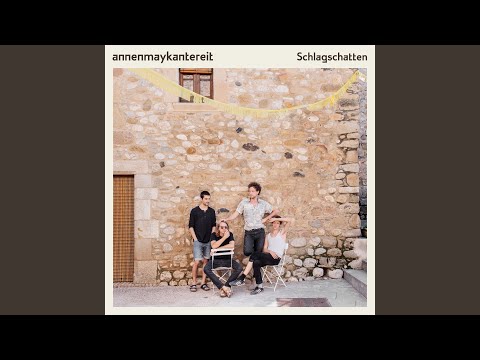
Sieben Jahre
AnnenMayKantereit
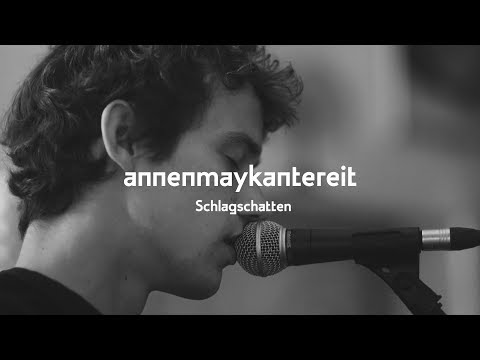
Schlagschatten
AnnenMayKantereit
3. Stock
AnnenMayKantereit
3. Stock
AnnenMayKantereit
3 Tage am Meer
AnnenMayKantereit
Es ist Abend
AnnenMayKantereit
Katharina
AnnenMayKantereit

Verliebt sein
AnnenMayKantereit
Orangenlied
AnnenMayKantereit

Intro
AnnenMayKantereit

So wies war
AnnenMayKantereit

Gegenwartsbewältigung
AnnenMayKantereit

Warte auf mich
AnnenMayKantereit
Ganz Egal
AnnenMayKantereit

Das Gefühl
AnnenMayKantereit

Die letzte Ballade
AnnenMayKantereit

Gegenwart
AnnenMayKantereit

Outro
AnnenMayKantereit
Lass es kreisen
AnnenMayKantereit
Chansons similaires

My Skin's On Fire
Loving Caliber

Don't You Wanna Stay
Loving Caliber

Those Eyes
New West

We Don't Talk Anymore
Charlie Puth, Selena Gomez

Monster
Shawn Mendes, Justin Bieber

Never Be the Same
Camila Cabello

The 30th
Billie Eilish

Ordinary
Alex Warren

Girls Wanna Have Fun
Josh Fawaz

Gimme Dat Love
(G)I-DLE

花咲く道
ME:I

未完成婚姻論
超学生, マサ

しおざきわんだーらんど
M!LK, 塩﨑太智

des fleurs
Tove Lo, Stromae

WOKE UP IN TOKYO
BABYMONSTER

No Promises
Shayne Ward

No promises
Shayne Ward

DREAMERS
Jungkook, Fahad Al Kubaisi

Em Mới Là Người Yêu Anh
MIN

Attention
Charlie Puth